
Herman Howard (1942–1980) was a founding member of the Kamoinge Workshop, the collective of Black photographers formed in New York in 1963 through the merger of two groups. Among the least-seen photographers of its first decade, he died having exhibited little of his work, much of which survived because fellow members kept it. The photographs that remain, made in New York during the 1960s and 1970s, are now held in part by The Museum of Modern Art, which owns work from both Kamoinge portfolios.
Howard joined Kamoinge through Group 35, the circle he had formed with Ray Francis, Louis Draper, Earl Jones, Calvin Mercer, and Mel Dixon. In 1963, Group 35 merged with a second gathering of photographers who met at Al Fennar’s apartment on West 112th Street, forming the Kamoinge Workshop. The name derives from a Kikuyu word meaning a group of people acting together. Roy DeCarava led the collective during its first two years.
The members met weekly to present, discuss, and challenge one another’s work, organizing their own exhibitions when established institutions offered few opportunities to show it. Howard’s photographs appeared in Theme Black in 1964 and The Negro Woman in 1965, both presented in a Harlem brownstone on Strivers Row, as well as in the Kamoinge portfolios of 1964 and 1965, both now held by The Museum of Modern Art. Sweet as Peach (1963) and his photograph of the March on Washington that same year are among the works for which he is known. He continued to photograph into the 1970s, including during a period of work in Guyana.
Howard died in 1980, at the age of thirty-eight. Few of his photographs were printed during his lifetime, and no comprehensive archive was assembled. His work is known today largely through collections preserved by fellow Kamoinge members, including Herb Robinson, and through prints subsequently acquired by museums. His photographs were included in Working Together: Louis Draper and the Kamoinge Workshop, organized by the Virginia Museum of Fine Arts in 2020 and presented at the Whitney Museum of American Art, the Cincinnati Art Museum, and the J. Paul Getty Museum, and in Photography and the Black Arts Movement, 1955–1985 at the National Gallery of Art and the Getty. Anthony Barboza’s 1972 portrait of Howard, made as part of his series on Kamoinge members, is held by the National Museum of African American History and Culture. Bruce Silverstein Gallery represents the artist.
-
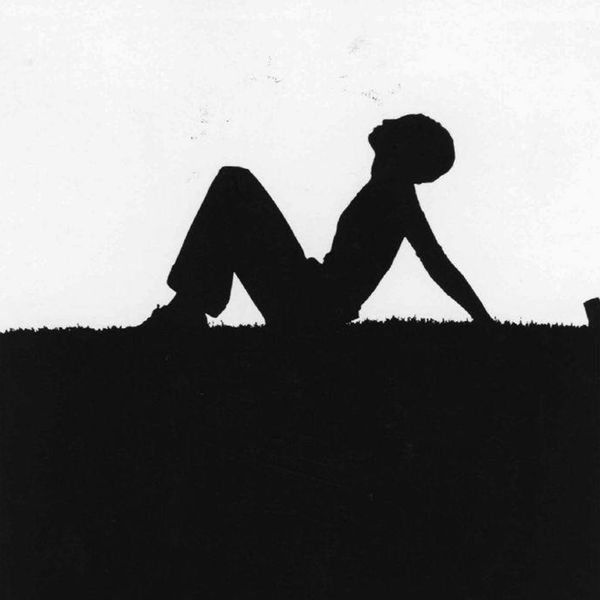
 Herman HowardUntitled, c. 1960sGelatin silver print, printed c. 1960s4 1/2 x 7 in (11.4 x 17.8 cm)
-
Herman HowardUntitled, Harlem, New York City, c. 1960sGelatin silver print, printed c. 1960s5 x 7 1/2 in (12.7 x 19.1 cm)
-
Herman HowardUntitled, Harlem, New York City, c. 1960sGelatin silver print, printed c. 1960s5 1/8 x 7 3/4 in (13 x 19.7 cm)
-
Herman HowardGuyana, c. 1970sGelatin silver print, printed c. 1970s5 1/4 x 8 in (13.3 x 20.3 cm)


-
Photography and the Black Arts Movement, 1955–1985
J. Paul Getty Museum at the Getty Center 24 Feb - 14 Jun 2026 Outside ExhibitionsAmid the turbulent decades of the mid-20th century, African American and Afro-Atlantic diaspora artists sought to celebrate a distinctly Black culture and advance the struggle for civil rights. Photographic images...Read more -
Photography and the Black Arts Movement, 1955–1985
National Gallery of Art - West Building 21 Sep 2025 - 11 Jan 2026 Outside ExhibitionsUniting around civil rights and freedom movements of the 1960s and 1970s, many visual artists, poets, playwrights, musicians, photographers, and filmmakers expressed hope and dignity through their art. These creative...Read more

