
Lewis Wickes Hine (1874–1940) used photography as an instrument of social reform, creating one of the foundational bodies of American documentary work. A sociologist before he became a photographer, he never separated the two disciplines. His photographs were made to expose inadequate housing, combat child labor and advocate for the people they depicted. They retain their force today for the same reasons they did in his own time.
Born in Oshkosh, Wisconsin, in 1874, Hine studied sociology at the University of Chicago, Columbia University and New York University. While teaching at the Ethical Culture School in New York, he took up photography as a classroom tool. In 1905, he began photographing arrivals at Ellis Island, making portraits of immigrants at the moment of entry that presented each sitter as an individual rather than a type.
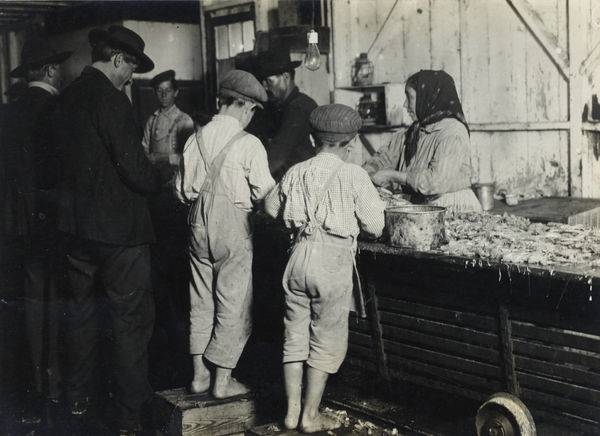
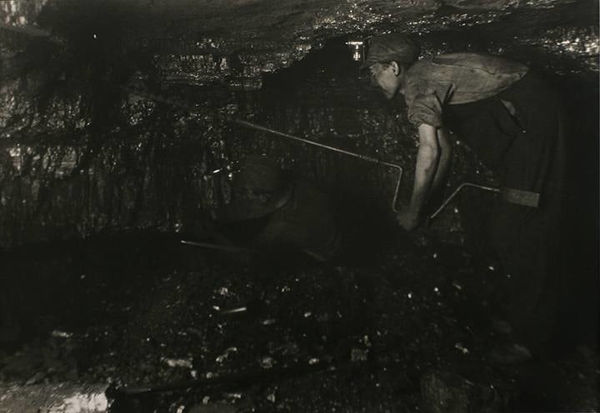
In 1908, Hine began working for the National Child Labor Committee. Over the following sixteen years, he travelled throughout the country, from the Carolina Piedmont to the Gulf Coast and the Midwest, sometimes covering as much as thirty thousand miles in a year. He photographed children working in canneries, mills, sweatshops, mines and fields, as well as on the streets. He recorded their names and ages and transcribed their accounts, making the captions an integral part of the work. The photographs became a powerful instrument in the campaign against child labor, contributing to the movement that led to the establishment of the Children’s Bureau in 1912 and, ultimately, the Fair Labor Standards Act of 1938.
Hine also photographed the Hull House district in Chicago. After the First World War, he worked for the American Red Cross in Europe and the Balkans. In 1930 and 1931, he climbed the rising steel framework of the Empire State Building to photograph the men constructing it, at times suspended above them in a specially made basket. Published as Men at Work in 1932, these images celebrated the skill and physical courage of industrial laborers. The photograph commonly known as Icarus, depicting a worker high atop the structure, remains his best-known image.
Recognition came too late. Hine died in Dobbs Ferry, New York, in 1940, with his work largely neglected. His son, Corydon, offered the prints and negatives to The Museum of Modern Art, which declined them. The archive instead passed to the Photo League and, following its dissolution in 1951, to George Eastman House.
-
 Lewis HineUntitled (Shrimp Pickers), Biloxi, Mississippi, 1911Gelatin silver print, printed c. 19114 5/8 x 6 5/8 in (11.7 x 16.8 cm)
-
Lewis HineUntitled, c. 1910Gelatin silver print, printed c. 1930s11 x 14 in (27.94 x 35.56 cm)
-
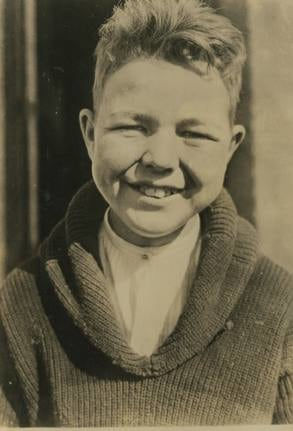
Lewis HineUntitled (boy, West Virginia), n.d.Gelatin silver print7 x 5 in (17.78 x 12.7 cm)
-
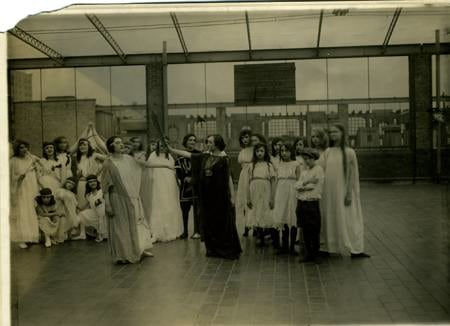
Lewis HineUntitled (children's performance), n.d.Gelatin silver print5 x 7 in (12.7 x 17.8 cm)
-

AIPAD 2019
4 - 7 Apr 2019Read more -

PARIS PHOTO 2018
8 - 11 Nov 2018Recognized today as one of the most influential figures in modern photography, the Hungarian artist, designer and educator, György Kepes (1906-2001) was one of the...Read more -

AIPAD 2018
5 - 8 Apr 2018Read more -

PARIS PHOTO 2014
13 - 16 Nov 2014Read more -

Frieze Masters 2014
15 - 19 Oct 2014For Frieze Masters 2014 Bruce Silverstein Gallery proposes a solo exhibition of the work of Keith Smith, an American artist active in the 1960s-80s. This...Read more -

AIPAD 2014
10 - 13 Apr 2014Read more -

PARIS PHOTO 2013
14 - 17 Nov 2013Read more -

ART BASEL 2013
13 - 16 Jun 2013For Art Basel 44 Bruce Silverstein Gallery would be pleased to present an exhibition of masterworks from the photographic medium. We will be featuring historically...Read more