David Anfam (1955–2024), author of the catalogue raisonné Mark Rothko: The Works on Canvas and former Senior Consulting Curator of the Clyfford Still Museum, was universally recognized as one of the preeminent scholars and curators of Abstract Expressionism. I first met him in 2014 during his preparation of Pollock’s Mural: Energy Made Visible. Our conversation turned to the work of Frederick Sommer, whose photographs were widely celebrated, though his paintings, drawings, collages, and musical scores had remained comparatively overlooked. That discussion prompted the inclusion of a Sommer painting in the exhibition and marked the beginning of a lasting friendship between us.
In 2016, Anfam and his co-curator, Edith Devaney, foregrounded the significance of photography within the Abstract Expressionist canon through their selections for the Royal Academy’s landmark exhibition Abstract Expressionism, to which I was honored to contribute several works. The exhibition received exceptional critical acclaim; the Financial Times described it as “the most pleasurable, provocative exhibition of American art in Britain this century.” Aaron Siskind, the sole photographer fully integrated into the Abstract Expressionist circle, occupied a central place in the presentation, alongside Frederick Sommer, Harry Callahan, Barbara Morgan, Herbert Matter, Hans Namuth, Gjon Mili, and Minor White, collectively affirming photography’s essential role in the movement’s visual and historical development.
Following the Royal Academy exhibition, David and I began outlining a project devoted specifically to Abstract Expressionist photography, reflecting his conviction that these artists offered indispensable, yet insufficiently examined, perspectives on the emergence of postwar abstraction. Although the exhibition remained unrealized due to competing obligations and his untimely passing, this focused yet abridged presentation at Art Basel Miami 2025, Pioneers of AbEx Photography, seeks to honor that original intent and to illuminate the foundational contributions of photography to the Abstract Expressionist movement.
This presentation serves as a tribute to David Anfam’s intellectual rigor, generosity of spirit, and unwavering commitment to expanding the understanding of Abstract Expressionism. His insights continue to shape the field, and his loss is deeply felt.
Bruce Silverstein, 2025
-
![Manuel Alvarez Bravo (1902-2002) Untitled [Red Graffiti: Skull and Heart], 1960 C-print, printed c. 1960 Signed and annotated on mount...](data:image/gif;base64,R0lGODlhAQABAIAAAAAAAP///yH5BAEAAAAALAAAAAABAAEAAAIBRAA7) Manuel Alvarez Bravo (1902-2002)Untitled [Red Graffiti: Skull and Heart], 1960C-print, printed c. 1960Signed and annotated on mount recto7 3/4 x 10 in (19.7 x 25.4 cm)
Manuel Alvarez Bravo (1902-2002)Untitled [Red Graffiti: Skull and Heart], 1960C-print, printed c. 1960Signed and annotated on mount recto7 3/4 x 10 in (19.7 x 25.4 cm) -
Manuel Álvarez Bravo (1902–2002)
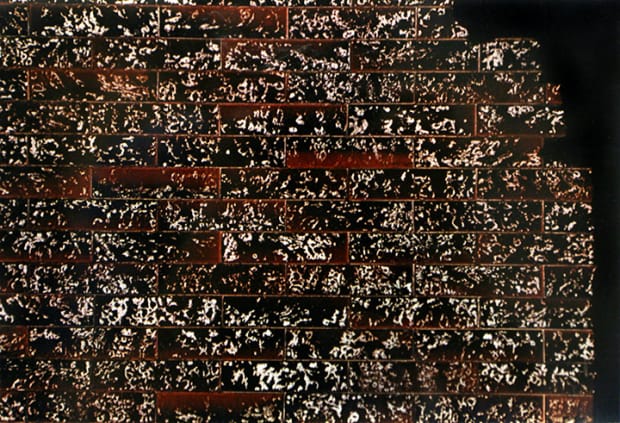
Untitled [Red Graffiti: Skull and Heart], 1960Manuel Álvarez Bravo, a key figure of modern Latin American photography, blended sharp observation with a quiet Surrealist sensibility shaped by the movement’s presence in Mexico. His work had a noted impact on Henri Cartier-Bresson, who regarded Bravo as a formative influence and praised his ability to find lyrical, symbolic meaning in everyday life. One of Bravo’s rare color works, Untitled (Red Graffiti, Skull and Heart), 1960, isolates a red-washed urban wall marked with a skull, a heart, and other sgraffito. These symbols transform the surface into an expressive field that echoes visual languages later associated with Cy Twombly and Jean-Michel Basquiat. The photograph’s interplay of mark-making, texture, and ambiguity reflects Bravo’s ability to draw poetic and conceptual depth from the street while anticipating the gestural emphasis that would become central to later developments in expressive abstraction. -
Harry Callahan (1912–1999)
Chicago, 1950 and Detroit, 1941–46Harry Callahan’s photographs reflect the experimental spirit of the New Bauhaus in Chicago, where he taught and, beginning in 1951, co-led the Institute of Design’s photography program with Aaron Siskind. Although he first explored disciplined studio exercises, the school’s emphasis on daily practice encouraged him to move outside and use the city, landscape, and even fallen leaves as material for visual experimentation. Chicago, 1950 turns a patch of scattered leaves into an all-over field of repeating forms whose dense, rhythmic patterning recalls the all-over surfaces of Jackson Pollock, where structure emerges through the accumulation of marks rather than a single central gesture. The early color image Detroit, 1941–46 comes from a moment when Callahan was testing the possibilities of color film, and its sweeping bands of motion show how he used light as a gestural tool. Together these photographs show how Callahan’s curiosity and willingness to experiment produced a photographic language that closely paralleled the development of abstraction in mid-century American art. -
-
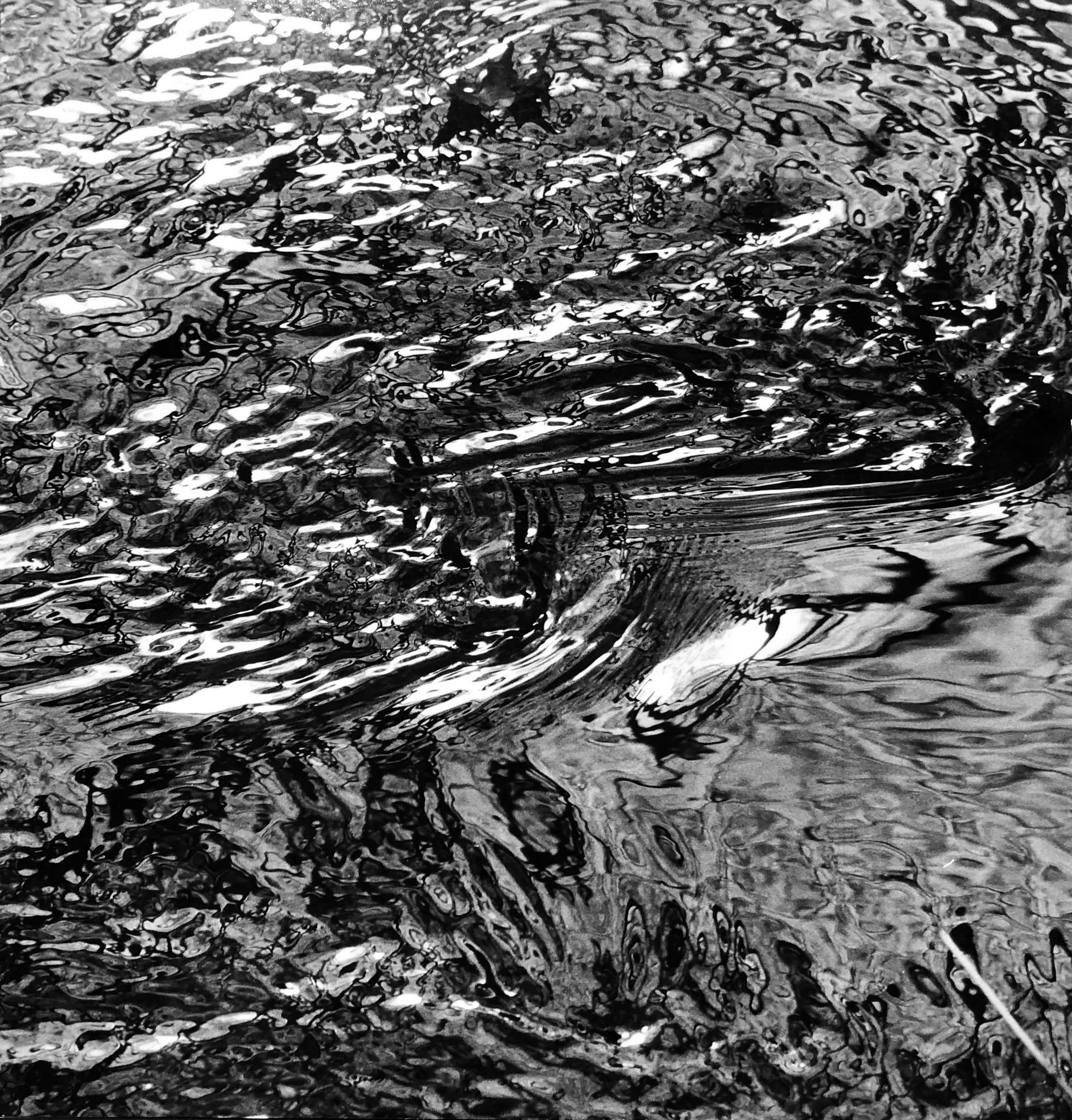
Adger Cowans (b. 1936)Water Patterns, 1960sGelatin silver print mounted to board, printed c. 1960sSigned and dated with artist credit and Stewart Associates stamps on mount verso8 3/4 x 8 1/2 in (22.2 x 21.6 cm)
-
Adger Cowans (b. 1936)
Water Patterns, 1960sAdger Cowans, a founding member of the Kamoinge Workshop, developed a practice that moves fluidly between photography and painting while remaining deeply committed to expressive abstraction. His involvement with Kamoinge and his later association with AfriCOBRA, the Chicago group dedicated to celebrating Black cultural identity through bold visual experimentation, shaped his belief in the emotional and spiritual power of image making. In Water Patterns, 1960s, Cowans isolates the shifting surface of water until it becomes a vibrating field of rippling lines and flickering reflections, producing an intensity that parallels the gestural freedom of his abstract paintings. The photograph’s calligraphic surface and emphasis on sensation and immediacy connect closely to concerns central to Abstract Expressionism, particularly the atmospheric, linear abstraction found in the work of Norman Lewis. This image demonstrates Cowans’s ability to transform everyday phenomena into expressive visual fields and affirms his role in expanding photographic abstraction within both African American cultural movements and postwar American art.
-
-
Adger Cowans (b. 1936)
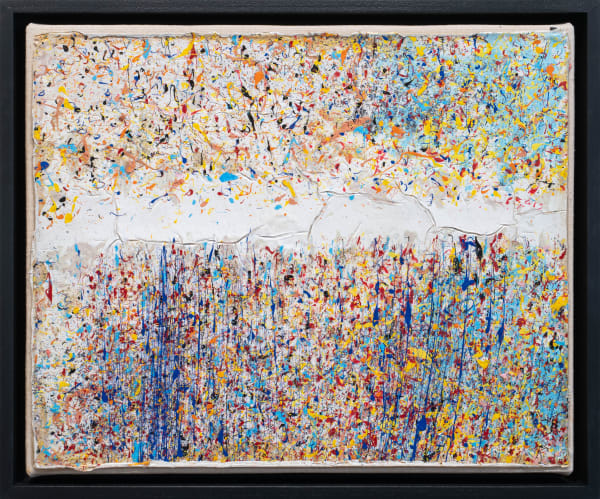
White Bolt Shimmer , 1991
Acrylic on canvas
Signed, titled, and dated on verso
Canvas: 9 3/4 x 11 7/8 in (24.8 x 30.2 cm)
Frame: 11 x 13 in (27.9 x 33 cm) -
Adger Cowans (b. 1936)
Untitled, 1970
Acrylic on canvas
Signed and dated on verso
Canvas: 12 3/8 x 11 1/4 in (31.4 x 28.6 cm)
Frame: 13 3/8 x 12 1/4 in (34 x 31.1 cm) -
Adger Cowans (b. 1936)
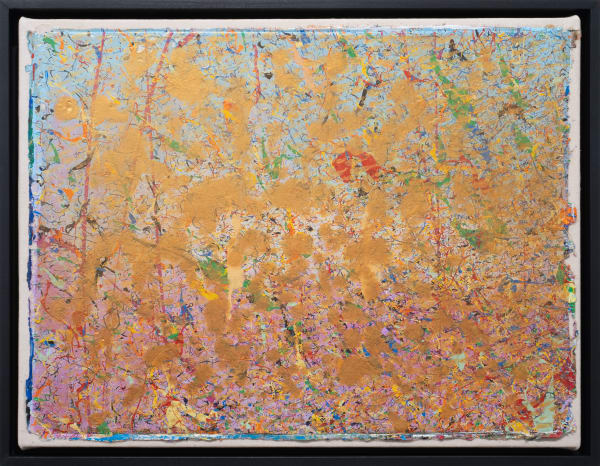
Untitled , 1980
Acrylic and gold powder on canvas
Signed and dated on verso
Canvas: 12 3/4 x 16 3/4 in (32.4 x 42.5 cm)
Frame: 13 7/8 x 17 7/8 in (35.2 x 45.4 cm) -
Adger Cowans (b. 1936)
Untitled, c. 1970s
Acrylic on canvas
Signed on verso
Canvas: 11 7/8 x 16 7/8 in (30.2 x 42.9 cm)
Frame: 12 7/8 x 17 7/8 in (32.7 x 45.4 cm) -
Adger Cowans (b. 1936)
Untitled, 1971
Acrylic on canvas
Signed and dated on verso
Canvas: 11 3/4 x 10 1/2 in (29.8 x 26.7 cm)
Frame: 12 7/8 x 11 5/8 in (32.7 x 29.5 cm) -
Adger Cowans (b. 1936)
Untitled, 1969
Acrylic and gold powder on blue vinyl
Signed and dated on verso
Canvas: 13 1/2 x 18 in (34.3 x 45.7 cm)
Frame: 14 5/8 x 19 in (37.1 x 48.3 cm)
-
-
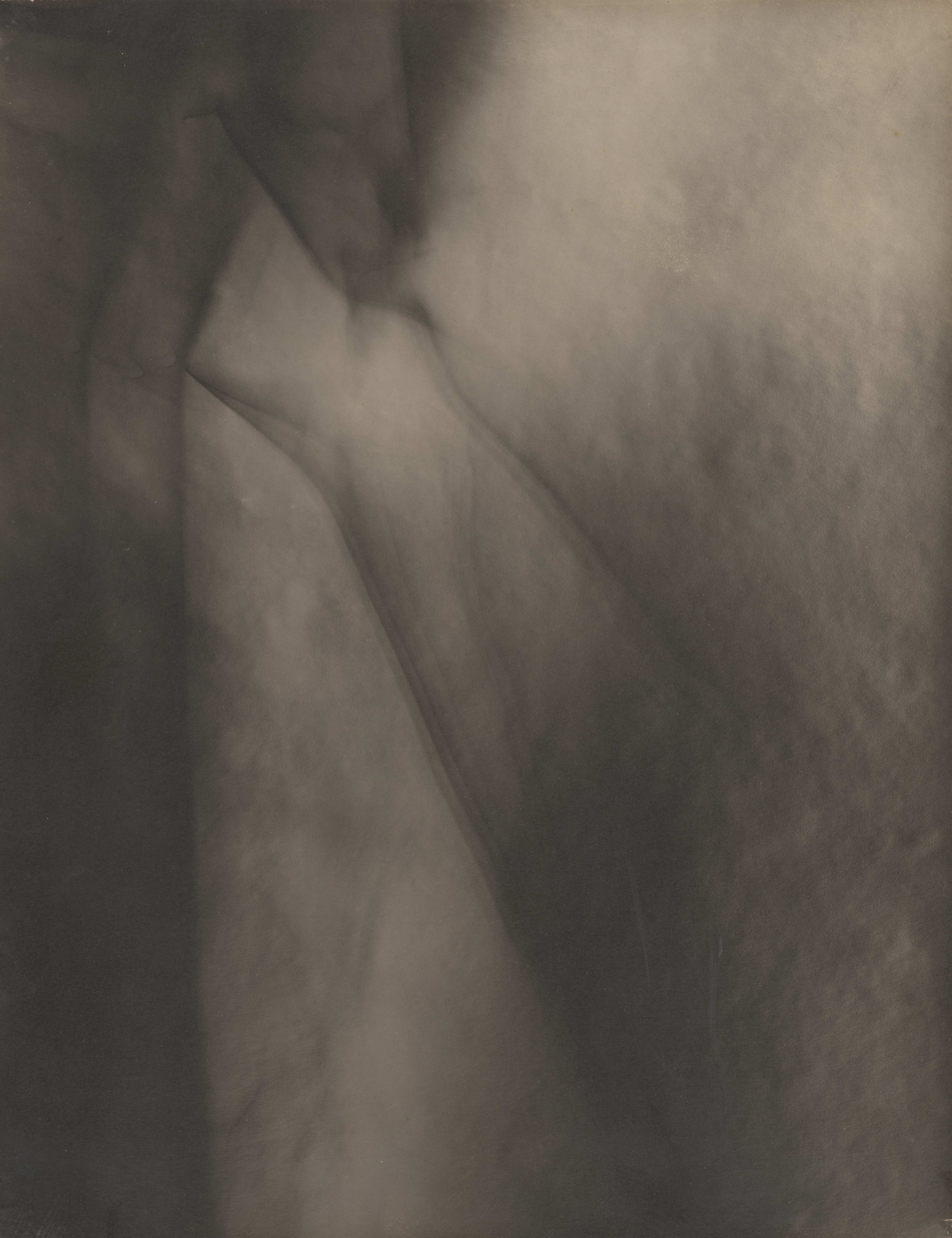
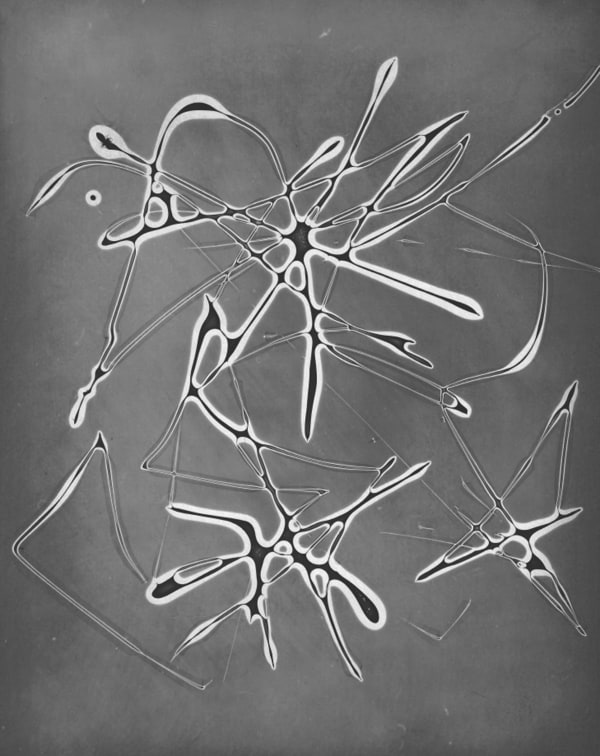
Lotte Jacobi (1896-1990)Untitled from the series: 'Photogenics', 1945Gelatin silver print mounted on wood panel, printed c. 1945Inscribed and signed in pencil on verso13 3/4 x 10 5/8 in (35 x 27.2 cm)
-
Lotte Jacobi (1896–1990)
Photogenic Drawing, 1945Lotte Jacobi, a German photographer known for her inventive spirit and fluid movement between portraiture and darkroom experimentation, developed a uniquely improvisational approach grounded in the broader currents of interwar modernism. Working directly on light-sensitive paper, she arranged and shifted translucent materials to create shadows, contours, and drifting lines that read as drawing made with light rather than graphite. Photogenic Drawing, 1945 reveals her interest in gesture, movement, and the atmospheric potential of light, qualities that resonate strongly with the soft transitions and luminous fields explored by Mark Rothko during his 1940s shift toward abstraction. Mounted on a thick wooden support, echoing Aaron Siskind’s practice, the piece emphasizes the photograph as an object and links its energetic forms to the gestural immediacy central to Abstract Expressionism. Jacobi’s combination of spontaneity, material intuition, and experimental technique positions her as a significant precursor to mid-century photographic abstraction.
-
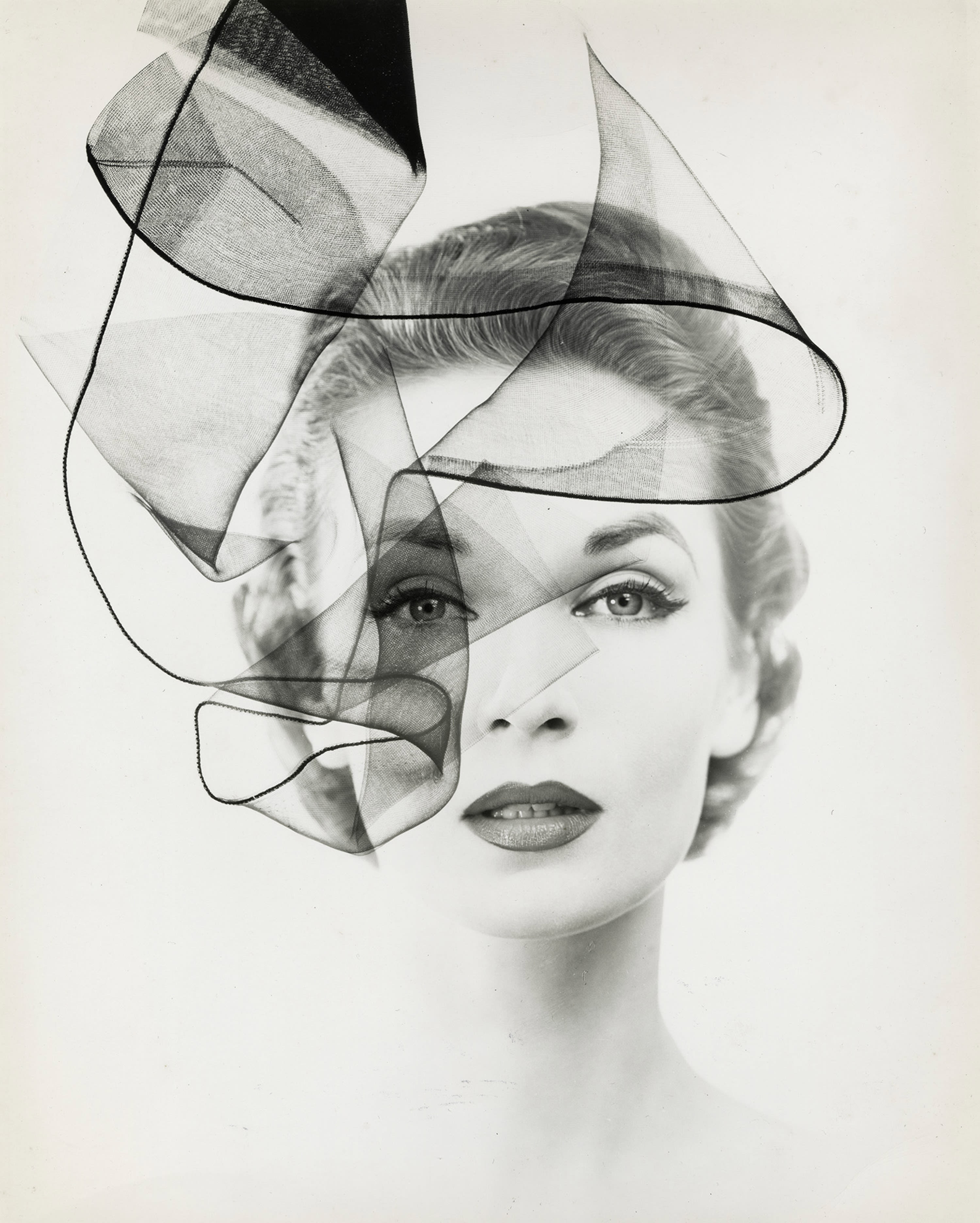
Herbert Matter (1907-1984)Untitled, 1939 - 1943Vintage gelatin silver print, printed c. 1939 - 1943Two Studio Associates Stamps in ink on verso13 1/2 x 11 in (34.3 x 27.9 cm)
-
Herbert Matter (1907–1984)
Untitled, 1939–1943Herbert Matter, the Swiss-born designer and photographer who studied under Fernand Léger and helped redefine American visual culture through his fusion of European Modernism and experimental photography, brought an inventive approach to light, collage, and form making him one of the most influential visual thinkers of his era. In this Untitled, 1939–1943 image he layers curved translucent planes of fabric across a tightly composed portrait, creating soft arcs, drifting contours, and shifting transparencies that imbue the sitter’s face with a quiet sense of movement and spatial ambiguity. These suspended forms and their interplay of opacity and luminosity closely parallel the gestural language explored by Abstract Expressionist painters such as Arshile Gorky, whose biomorphic transitions and atmospheric curves echo the photograph’s subtle tension. Through this seamless fusion of commercial portraiture and avant-garde experimentation Matter emerges as a vital precursor to mid-century abstraction, demonstrating how photography could anticipate the spatial innovation and expressive depth that would define the Abstract Expressionist movement.
-
-
Herbert Matter (1907-1984)Figure in Motion, 1939Vintage gelatin print, printed c. 1939Estate stamp in ink on verso6 3/4 x 6 1/2 in (17.2 x 16.5 cm)
-
Herbert Matter (1907-1984)Untitled, 1944Vintage gelatin silver print, printed c. 1944Artist's stamp in ink on verso13 15/16 x 10 15/16 in (35.4 x 27.8 cm)
-
Herbert Matter (1907-1984)Untitled, 1939 - 1943Vintage gelatin print, printed c. 1939 - 1943Studio Associates Stamp in ink on verso13 7/16 x 10 7/16 in (34.1 x 26.5 cm)
-
Herbert Matter (1907-1984)Untitled, 1939 - 1943Vintage gelatin silver print, printed c. 1939 - 1943Estate stamp in ink on verso11 1/2 x 11 in (29.2 x 27.9 cm)
-
-
-
Gjon Mili (1904-1984)
Pablo Picasso Drawing with Light, 1949
Gelatin silver print
The Richard Checani Collection stamp on verso
14 x 11 in (35.6 x 27.9 cm)
-
Gjon Mili (1904-1984)
Picasso Drawing with Light, 1949
Gelatin silver print, printed c. 1949
Photographer's address stamp and Richard Checani Collection stamp on verso
13 3/8 x 10 5/8 in (34 x 27 cm)
-
Gjon Mili (1904-1984)
Picasso Space Drawing, France, 1949
Gelation silver print, printed c. 1950s
Title "Pablo Picasso making a space drawing", date, and photographer's credit in ink on verso
13 1/4 x 10 1/2 in (33.7 x 26.7 cm)
-
-
Gjon Mili (1904–1984)
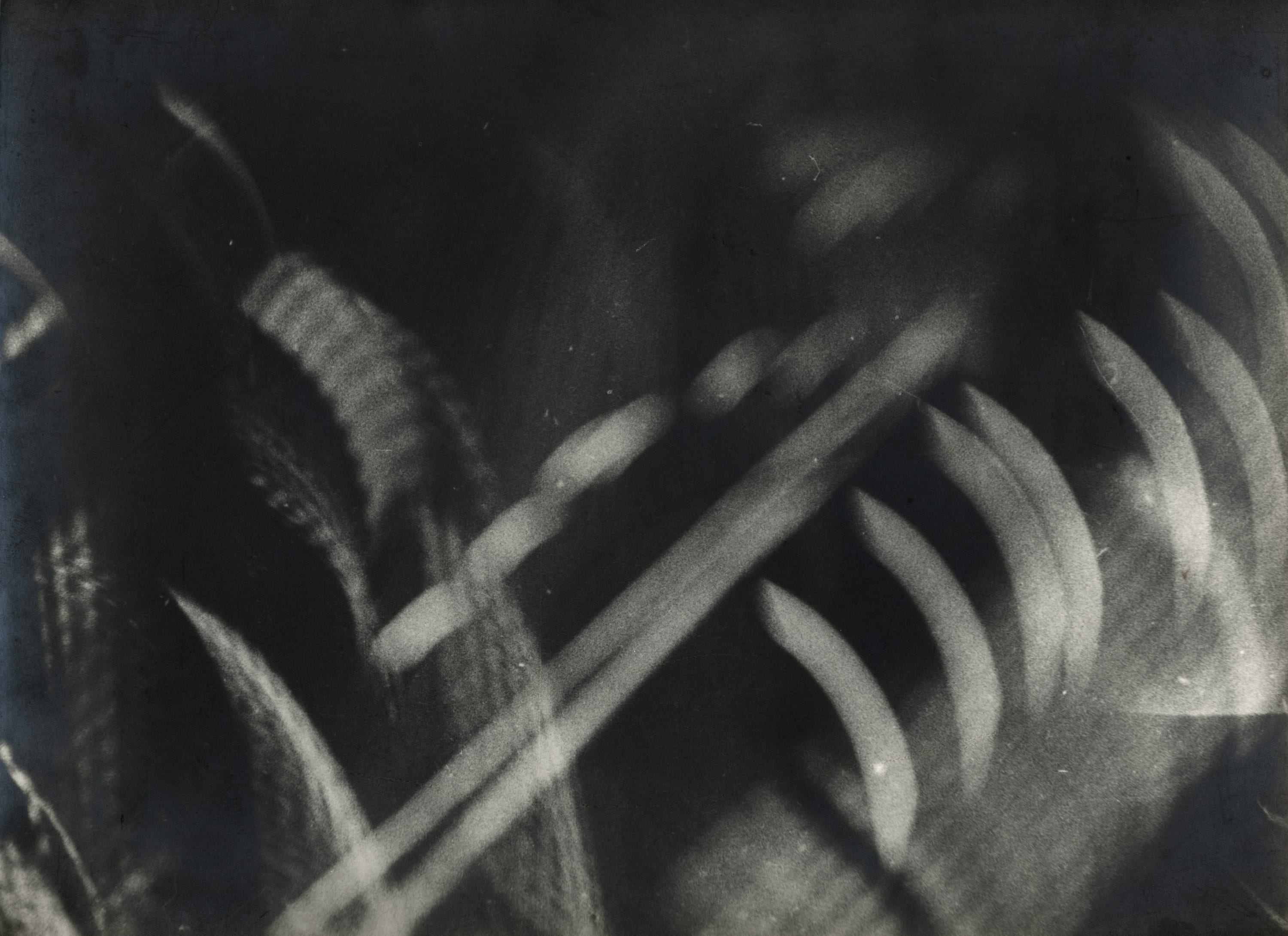
Three photographs of Picasso drawing with light, 1949Gjon Mili, the American photographer and technical innovator known for his explorations of light and motion, made this photograph during a 1949 visit with Pablo Picasso in the south of France. In a darkened room, Picasso used a small electric light to draw a bull in the air while Mili opened the camera’s shutter and used a timed strobe to register the artist’s shifting position. The resulting image preserves a drawing that existed only for the duration of the gesture, transforming an action performed in space into a fixed visual form. In capturing the sweeping arcs of illumination as they unfold around Picasso’s moving body, the photograph echoes the energetic, improvisational brushwork of Willem de Kooning, whose paintings similarly reveal the physical momentum behind their creation. First exhibited at the Museum of Modern Art in 1950, the photograph demonstrates how photography could translate movement into image, anticipating the emphasis on process, immediacy, and lived action that would become central to the visual language of Abstract Expressionism. -
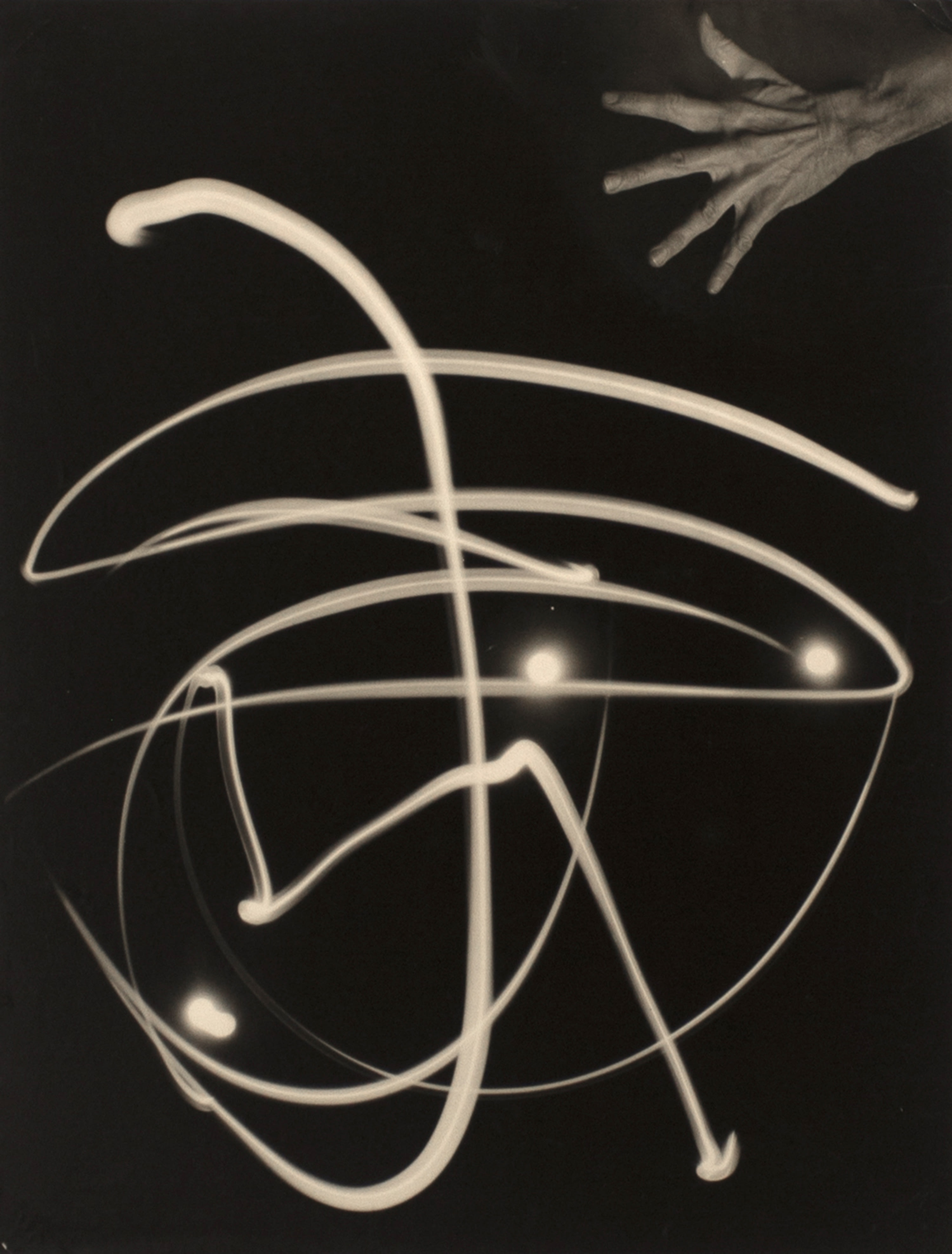
Barbara Morgan (1900-1992)Pure Energy and Neurotic Man, 1945Gelatin silver print mounted to board, printed c. 1960sSigned in pencil on mount underneath image; Titled in lower left edge of the mount; Signed and titled in ink on the reverse of the mount with copyright stamp13 1/2 x 10 3/8 in (34.3 x 26.4 cm)
-
Barbara Morgan (1900–1992)
Light Drawings (including Pure Energy and Neurotic Man, c. 1940–45)Barbara Morgan was a pioneering American photographer whose practice spanned modern dance photography, Surrealist-inflected photomontage, photograms, and mixed-media works, all unified by her commitment to exploring movement and visual rhythm. After encountering Martha Graham in 1935, she began a collaboration that helped define the photographic language of American modern dance and shaped her interest in translating motion into image. Her Light Drawings, including Pure Energy and Neurotic Man, c. 1940–45, extend this exploration into the darkroom: working in a darkened studio, Morgan traced arcs of light with a handheld flashlight during long exposures while a brief strobe revealed her hand entering the frame. The photograph merges performance and image, preserving both the motion of the light and the presence of the body that produced it. The bold, directional sweeps echo the dynamic stroke and physical momentum found in the paintings of Franz Kline, whose work similarly highlights the force behind the mark. By treating light as a drawing instrument and the camera as a tool for registering gesture in real time, Morgan expanded the expressive possibilities of photography and helped shape the visual approaches that would inform the emergence of Abstract Expressionism.
-
-
Barbara Morgan (1900-1992)Samadhi, 1940Gelatin silver print mounted to board, printed laterSigned, titled, and dated on mount recto and verso27 7/8 x 22 in (70.8 x 55.9 cm)
-
Barbara Morgan (1900-1992)Serpent Light III, 1948Gelatin silver print mounted to board, printed c. 1979Signed, titled, and dated on mount recto and verso22 1/2 x 17 in (57.1 x 43.2 cm)
-
-
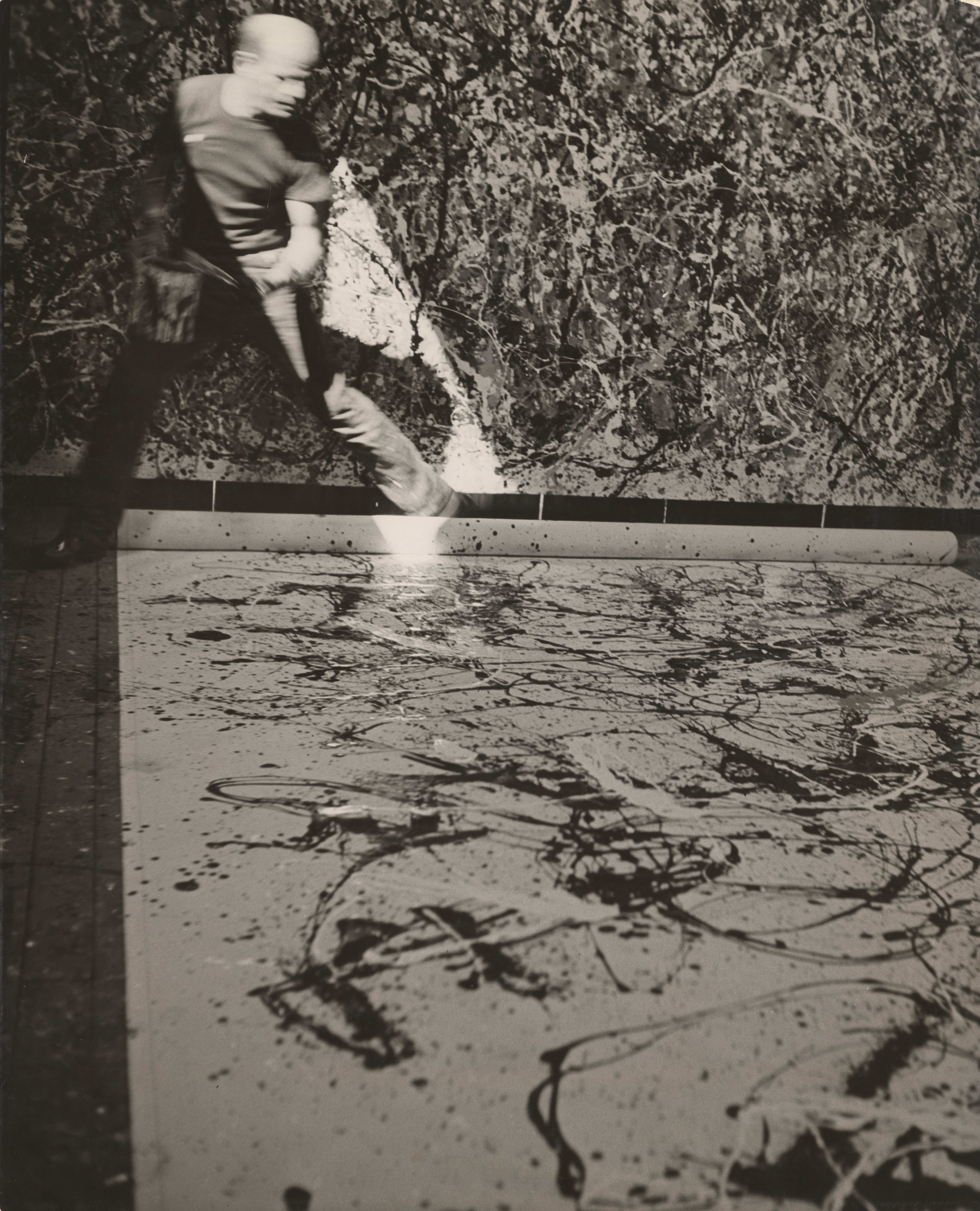
Hans Namuth (1915-1990)Jackson Pollock, 1950Vintage gelatin silver print mounted to board, printed c. 195020 x 16 in (50.8 x 40.6 cm)
-
Hans Namuth (1915–1990)
Photographs of Jackson Pollock, 1950Hans Namuth, a German American photographer celebrated for his incisive portraits of artists at work, produced in 1950 some of the most iconic visual records of Abstract Expressionism through his photographs of Jackson Pollock in the painter’s East Hampton studio. These images capture Pollock moving around the canvas with arcs of paint suspended in the air and lines of motion frozen at the moment of creation, revealing the performative intensity that defined his approach. Namuth’s close framing, sharp clarity, and immersion within the action emphasized gesture, rhythm, and physical presence, transforming the photographs a true reflection of the movement. First widely reproduced in ARTnews and later in museum catalogues, biographies, and nearly every major text on Abstract Expressionism, the photographs shaped public understanding of both Pollock and the centrality of process within the movement’s visual and cultural narrative. The works on view demonstrate how Namuth’s lens elevated documentary photography into a critical interpretive tool, preserving the immediacy of Pollock’s method and cementing the status of the action painter as a defining figure of Abstract Expressionism. -
-
Hans Namuth (1915-1990)Jackson Pollock, 1950Vintage gelatin silver print, printed c. 1950Artist wetstamps and Rapho stamps on verso13 3/4 x 10 3/4 in (34.9 x 27.3 cm)
-
Hans Namuth (1915-1990)Jackson Pollock, 1950Vintage gelatin silver print, printed c. 1950Artist wetstamps and Rapho stamps on verso13 3/4 x 10 3/4 in (34.9 x 27.3 cm)
-
Hans Namuth (1915-1990)Jackson Pollock, 1950Vintage gelatin silver print on original board, printed c. 1950Artist wetstamp on verso16 1/2 x 13 1/2 in (41.9 x 34.3 cm)
-
-
Man Ray (1890-1976)Emak Bakia (film still), 1926Unique gelatin silver print, printed c. 1926-1927Titled and dated 1927 in artist's hand on verso9 x 11 5/8 in (22.9 x 29.8 cm)
-
Man Ray (1890–1976)
Emak Bakia (Film Still), 1926Man Ray, one of the most influential figures in Dada, Surrealism, and the early modernist avant-garde, continually expanded the boundaries of photographic expression through cameraless images, solarization, montage, and film. This unique gelatin silver print from Emak Bakia,1926 reflects his interest in chance, abstraction, and the liberation of form from conventional representation. Produced during the making of his experimental film, the still records shifting patterns of light and shadow that compress movement into a single frame, generating a composition that feels suspended between photography and cinema. Its arcs, repeated curves, and layered tonal fields convey a sense of motion without depicting any literal action, embodying Man Ray’s drive to transform ordinary materials and gestures into unexpected visual events. By approaching the moving image as a site for spontaneous invention, he introduced a vocabulary of abstraction that anticipated later explorations of gesture, improvisation, and material presence central to Abstract Expressionism. The photograph stands as a concise statement of his innovative vision and his lasting impact on the development of experimental photographic practice. -
-
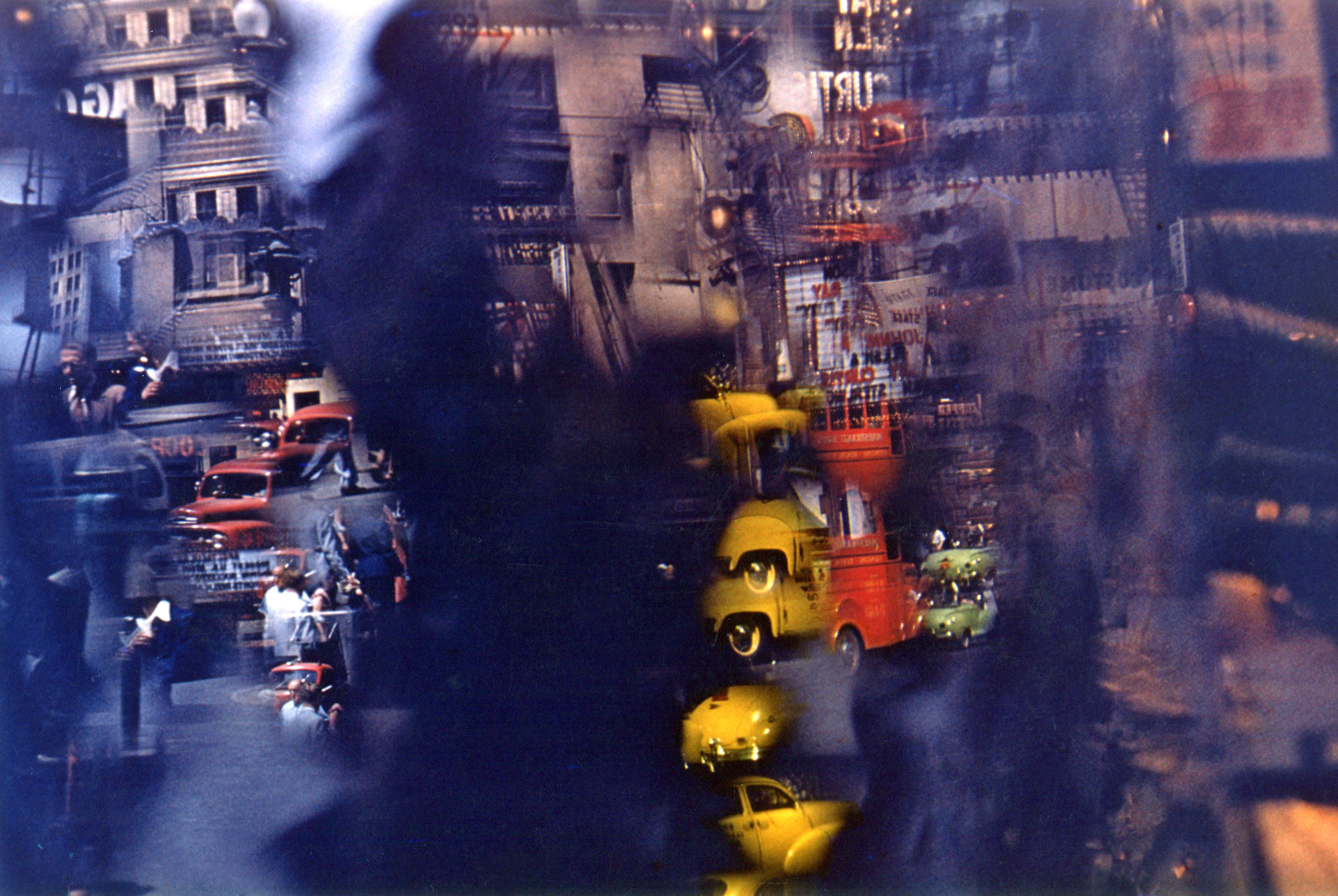
Arthur Siegel (1913-1978)Untitled, From the Series 'In Search of Myself', 1951Dye transfer print mounted to board, printed c. 1950'sSigned, initialed, and dated on mount verso6 7/8 x 10 in (17.5 x 25.4 cm)
-
Arthur Siegel (1913–1978)
Untitled (In Search of Myself), 1951Arthur Siegel, a pioneering photographer and long-time faculty member at the Institute of Design in Chicago, developed a practice that bridged commercial photojournalism, experimental photograms, and early color processes. After a period of personal turmoil, including a nervous breakdown in 1951, Siegel began Freudian analysis, and at his analyst’s urging turned to the camera as a means of exploring identity. In the series In Search of Myself, 1951, he photographed Chicago’s State Street using multiple exposures and reflections in storefront windows to layer taxis, pedestrians, neon signs, architecture, merchandise, and his own faint portrait into dense, shifting compositions. Printed as dye-transfer photographs, a rare, labor-intensive, and expensive process at the time, the works reflect both the emotional and technical investment in the project. Rather than documenting the city, Siegel dissolves it into a mosaic of color and form that functions as a metaphor for psychological inquiry, with his figure present yet never fully defined. In this way, his work echoes the paintings of Richard Pousette-Dart, whose symbolic networks and radiating surfaces evoke an inner psychology. Through this fusion of personal reflection and experimental technique, Siegel aligned photographic innovation with the inward focus that shaped key developments in postwar abstraction.
-
-
-
Aaron Siskind (1903-1991)Chicago 22, 1952Gelatin silver exhibition print flush-mounted to Masonite with original wood cleats, printed c. 1952Titled, dated, and annotated 'AS A-3-967. Chicago, 1952, V.P.' with Egan gallery label on mount verso13 1/4 x 16 1/2 in (33.7 x 41.9 cm)
-
Aaron Siskind (1903-1991)Untitled (Water-stained Wallpaper), 1949Gelatin silver print flush mounted to masonite with original wooden cleats, printed c. 1949Signed and dated on verso10 1/8 x 13 1/4 in (25.7 x 33.7 cm)
-
Aaron Siskind (1903-1991)South Street 13, 1950Gelatin silver print, printed c. 1957Signed, titled, dated and annotated on verso10 1/8 x 13 1/8 in (25.7 x 33.3 cm)
-
-
Aaron Siskind (1903–1991)
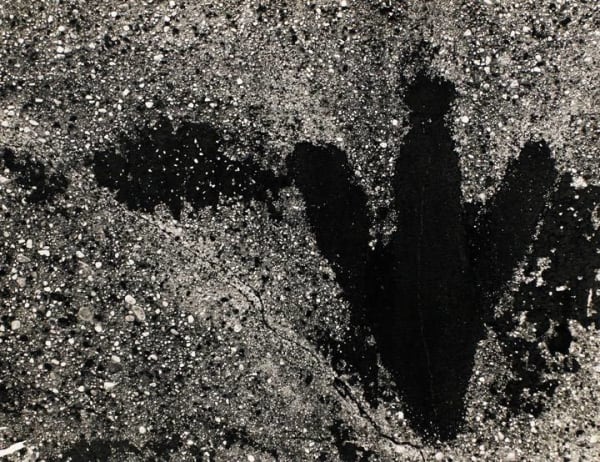
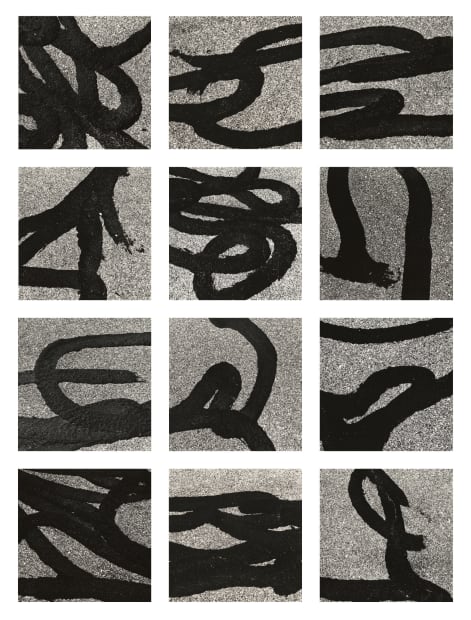
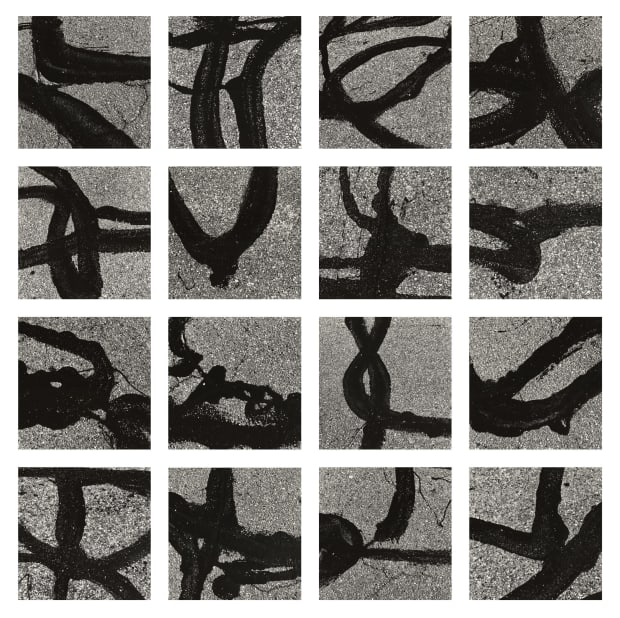
Key AbEx Photographic Works, c. 1945–1954Aaron Siskind was the only photographer fully integrated into the Abstract Expressionist circle and one of the most influential figures in twentieth century photography. Beginning as a documentary photographer with the New York Photo League in the 1930s, he shifted decisively toward abstraction in the early 1940s, turning to peeling paint, cracked pavements, tar marked asphalt, graffiti, and other weathered surface textures as subjects. Through close-up framing, careful cropping, and strong contrasts, Siskind transformed these ordinary materials into bold graphic shapes that paralleled the gestural language of Abstract Expressionist painting. He exhibited at the prestigious Charles Egan Gallery, which was a central venue of the New York School representing leading painters such as Franz Kline, Willem de Kooning, and Barnett Newman. Some works in this exhibition are rare vintage prints mounted on Masonite and attached to stretchers, a practice he developed to give his photographs the physical presence of painting and to assert photography’s place within Abstract Expressionism. Through his experimental vision, his relationships with key Abstract Expressionist painters, and his years of teaching at the Institute of Design in Chicago and RISD, Siskind helped establish a photographic language of abstraction, securing his place as an important force in the history of postwar American art.
-
-
-
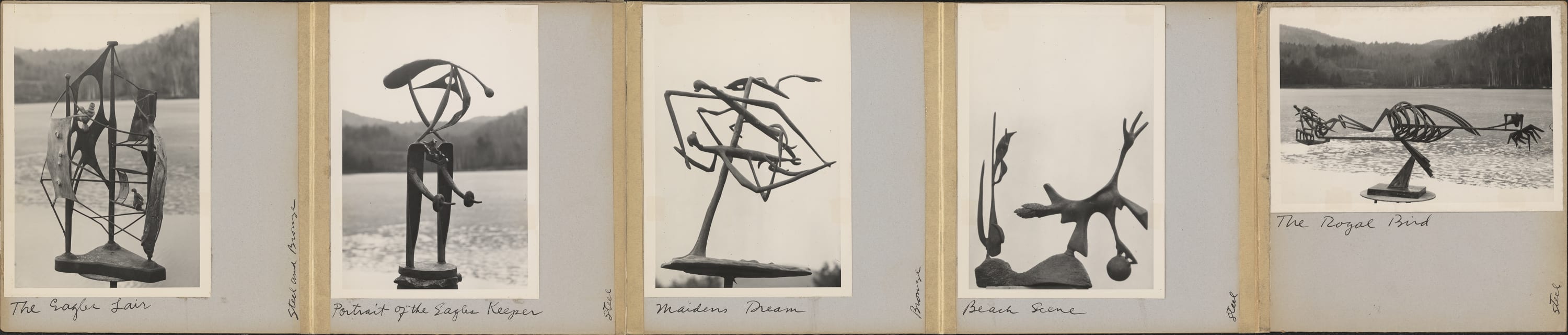
David Smith (1906-1965)
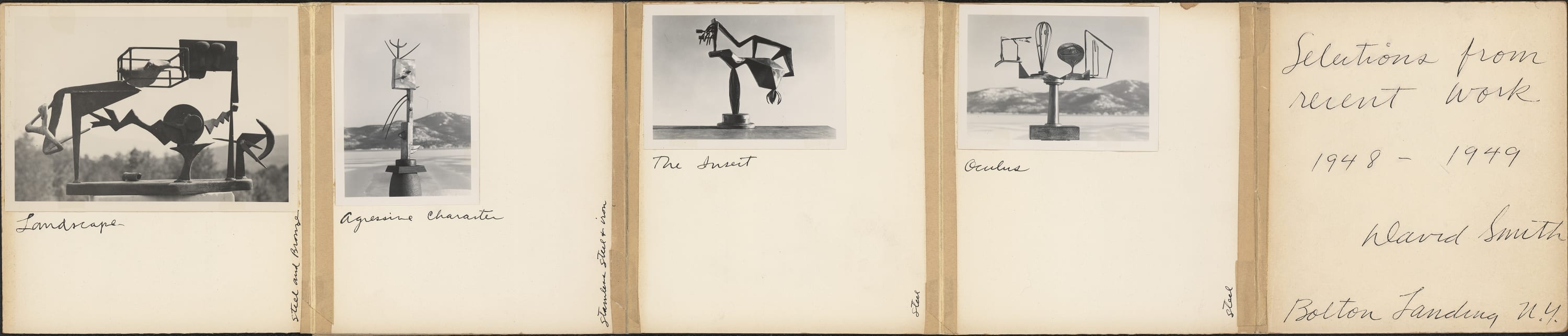
Selections from Recent Work, 1948 - 1949
Accordion book with gelatin silver prints, printed c. 1949
Signed, titled, dated on cover
Closed: 8 x 7 1/2 in (20.3 x 19.1 cm)
Open: 8 x 37 1/2 in (20.3 x 95.3 cm) -
David Smith (1906–1965)
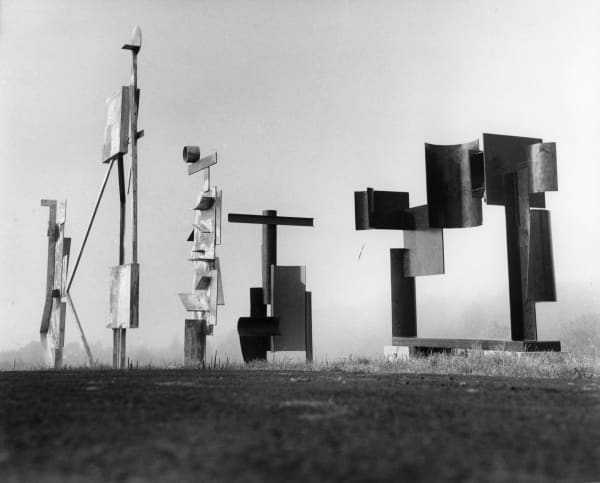
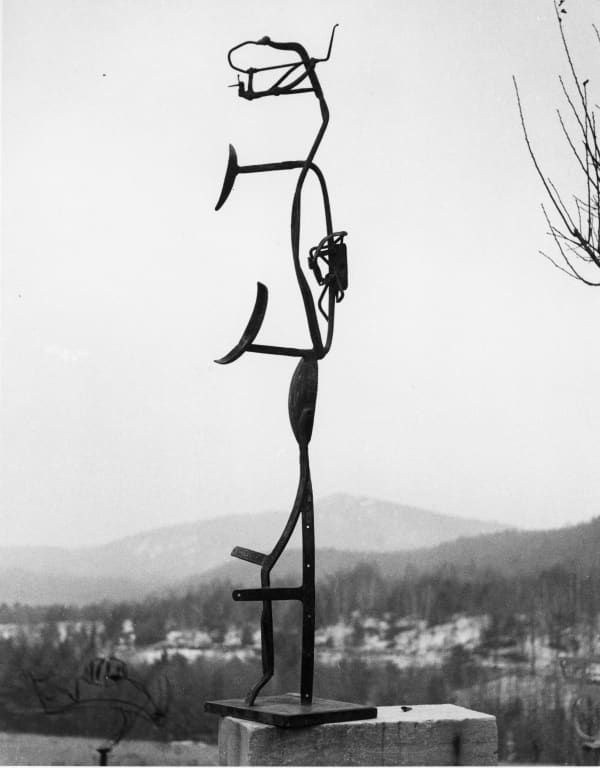
Selections from Recent Work, 1948–1949David Smith, the foremost sculptor associated with Abstract Expressionism, often photographed his own welded steel constructions as part of his creative process. The pages seen here, assembled as a presentation booklet for Clement Greenberg, include Smith’s photographs of sculptures made in 1948 and 1949, taken outdoors at his Bolton Landing property. Set against open fields, distant mountains, and shifting skies, the images reveal how he used the camera to understand scale, reflection, form, and the linear structure of his work. Smith treated these images as portraits, heightening the anthropomorphic qualities of his sculptures and giving the steel forms an almost animated presence as they stand against the landscape. Although he did not belong to the circle of artists traditionally labeled Abstract Expressionist photographers, his photographs share the movement’s emphasis on expressive form, dramatic framing, and the transformation of everyday materials into dynamic visual events. By using photography to study and shape the perception of his sculptures, Smith expanded the possibilities of both mediums and aligned his practice with the evolving language of postwar abstraction. -
-
David Smith (1906-1965)The Royal Bird, 1940sGelatin silver print, printed c. 1947-1948Willard Gallery stamp on verso8 x 10 in (20.3 x 25.4 cm)
-
David Smith (1906-1965)March Sentinel, Two Box Structure, Two Circle Sentinel, Zig II, Zig III, 1961Gelatin silver print, printed c. 1961Signed and sculptures identified and annotated "5 from group of 10 in 1 man Carnegie Pittsburgh show" by the artist on verso8 x 10 in (20.3 x 25.4 cm)
-
David Smith (1906-1965)Personage of August, 1957Gelatin silver print, printed c. 1957Credited and titled on verso10 x 8 in (25.4 x 20.3 cm)
-
David Smith (1906-1965)Australia, 1951Gelatin silver print, printed c. 1951Credited David Smith with annotations and Solomon R. Guggenheim Museum label and ArtNews stamp on verso8 x 10 in (20.3 x 25.4 cm)
-
-
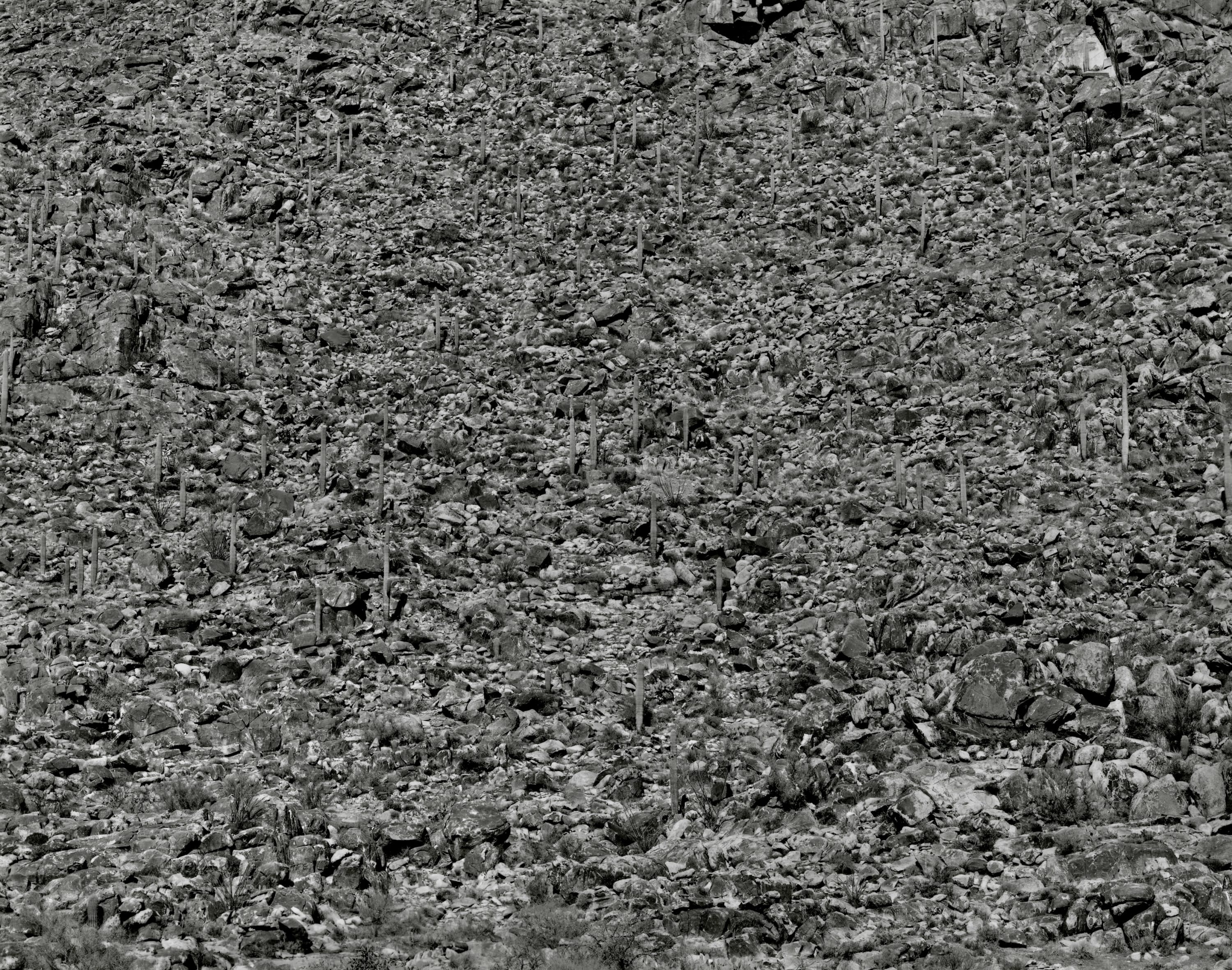
Frederick Sommer (1905-1999)Arizona Landscape, 1943Gelatin silver print mounted to board, printed laterSigned, titled and dated in pencil on mount verso7 1/2 x 9 1/2 in (19.1 x 24.1 cm)
-
Frederick Sommer (1905–1999)
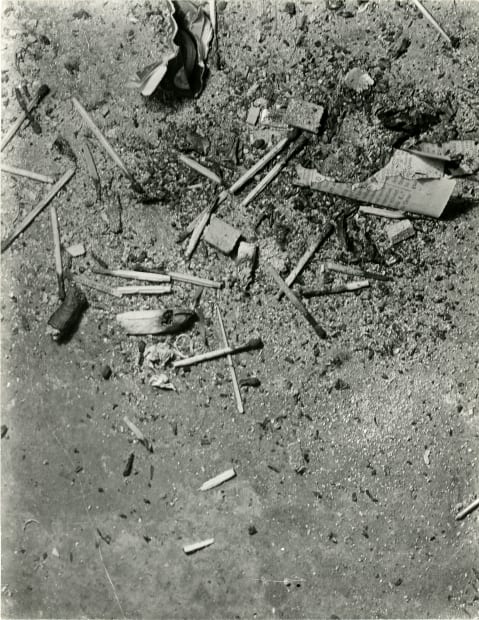
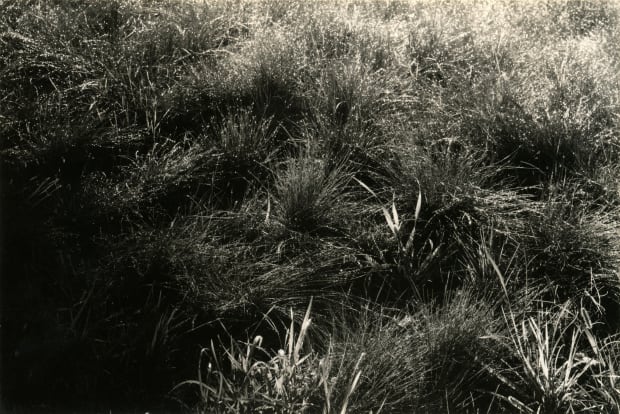
Arizona Landscape, 1943Frederick Sommer was a true polymath whose work in photography, drawing, painting, collage, and abstract visual musical scores was deeply informed by Surrealism and Dada and explored formal experimentation in ways that prefigure later abstraction. In Arizona Landscape, 1943, made several years before Abstract Expressionism emerged in New York, he framed a horizonless desert scene to create a flattened, tonal field that emphasizes form and texture over literal representation, evoking a psychological and emotional space. In Cut Paper, 1977, he transforms fragile or ephemeral sculptural objects into photographic records, making the image the sole evidence of their existence while exploring form, scale, and spatial ambiguity. Although he was not a core member of the New York School, Sommer’s visual experiments resonate conceptually with mid-century abstraction; his isolation of forms and decontextualization of natural elements align with the concerns of Abstract Expressionist painters. His circle included photographers like Aaron Siskind and avant-garde contemporaries such as Max Ernst. His work was collected early by major institutions, including the Musem of Modern Art, and his photographs were shown in their Abstract Expressionist New York survey (October 3, 2010–April 25, 2011).
-
-
Frederick Sommer (1905-1999)Cut Paper, 1977Gelatin silver print mounted to board, printed c. 1977Signed and dated in pencil on mount verso9 5/8 x 7 5/16 in (24.4 x 18.6 cm)
-
Frederick Sommer (1905-1999)Virgin and Child with St. Anne and the Infant St. John, 1966Gelatin silver print, printed no later than 1977Signed, titled, and dated on mount verso9 3/8 x 7 in (23.8 x 17.8 cm)
-
Frederick Sommer (1905-1999)Untitled (Foil Draw), 1970Gelatin silver print mounted to board, printed laterSigned and dated in pencil on mount verso9 1/2 x 7 1/2 in (24.1 x 19.1 cm)
-
Frederick Sommer (1905-1999)Glass, 1943Gelatin silver print mounted to board, printed c. 1943Signed and dated in pencil on mount verso
"B" annotated in pencil on mount recto7 5/8 x 9 1/2 in (19.4 x 24.1 cm) -
Frederick Sommer (1905-1999)Durer Variation #2, 1966Gelatin silver print mounted to board, printed laterSigned, titled, and dated in pencil on mount verso9 1/2 x 7 1/2 in (24.1 x 19.1 cm)
-
Frederick Sommer (1905-1999)Arizona Landscape, 1945Gelatin silver print mounted to board, printed laterSigned, titled, and dated in pencil on mount verso7 1/2 x 9 1/2 in (19.1 x 24.1 cm)
-
-
Edward Steichen (1879-1973)Friends, Romans and Countrymen, 1920Palladium print, printed c. 1920Titled on verso8 x 9 7/8 in (20.3 x 25.1 cm)
-
Edward Steichen (1879–1973)
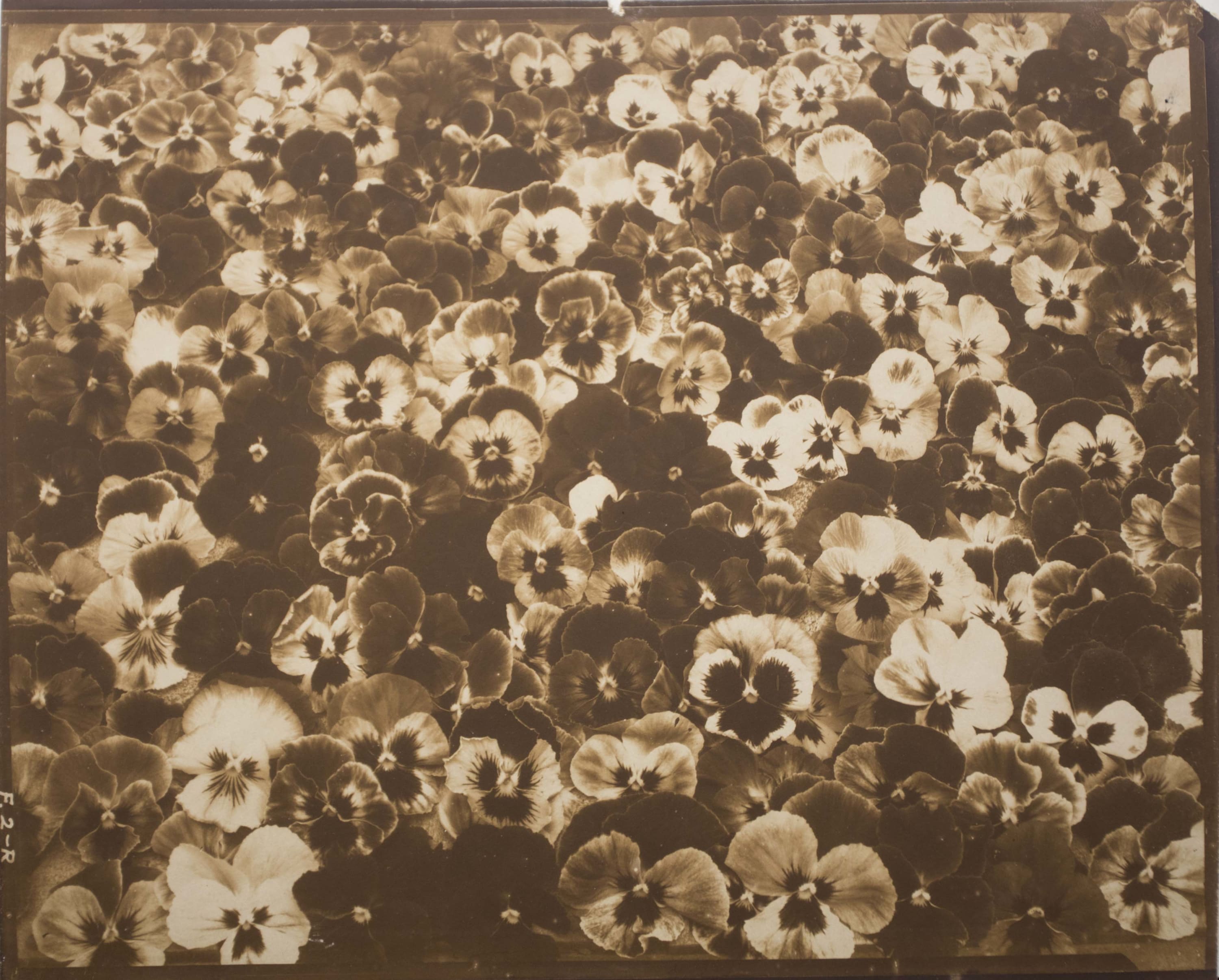
Friends, Romans and Countrymen, 1920Edward Steichen was a foundational figure in early twentieth-century photography and one of the medium’s most influential innovators. His early colored Pictorialist works, including The Flatiron, are among the most celebrated photographs of the period. They set the stage for his later leadership at 291 alongside Alfred Stieglitz, where he helped introduce European Modernism to American audiences before redefining portrait and fashion photography for Vanity Fair and Vogue and eventually leading the Department of Photography at the Museum of Modern Art. In Friends, Romans and Countrymen, c. 1920, he transforms a densely packed field of flowers into an all-over plane of tonal repetition, dissolving descriptive detail into a unified and immersive field of patterned light. This dissolution of individual forms into surface and rhythm anticipates Abstract Expressionism and stands as an important precursor to the all-over intensity pursued by artists such as Jackson Pollock and Mark Tobey. The photograph reveals Steichen’s ability to translate the natural world into an expressive visual field and affirms his pivotal role in shaping the foundations on which mid-century abstraction would build.
-
Alfred Stieglitz (1864-1946)
-
Alfred Stieglitz (1864–1946)
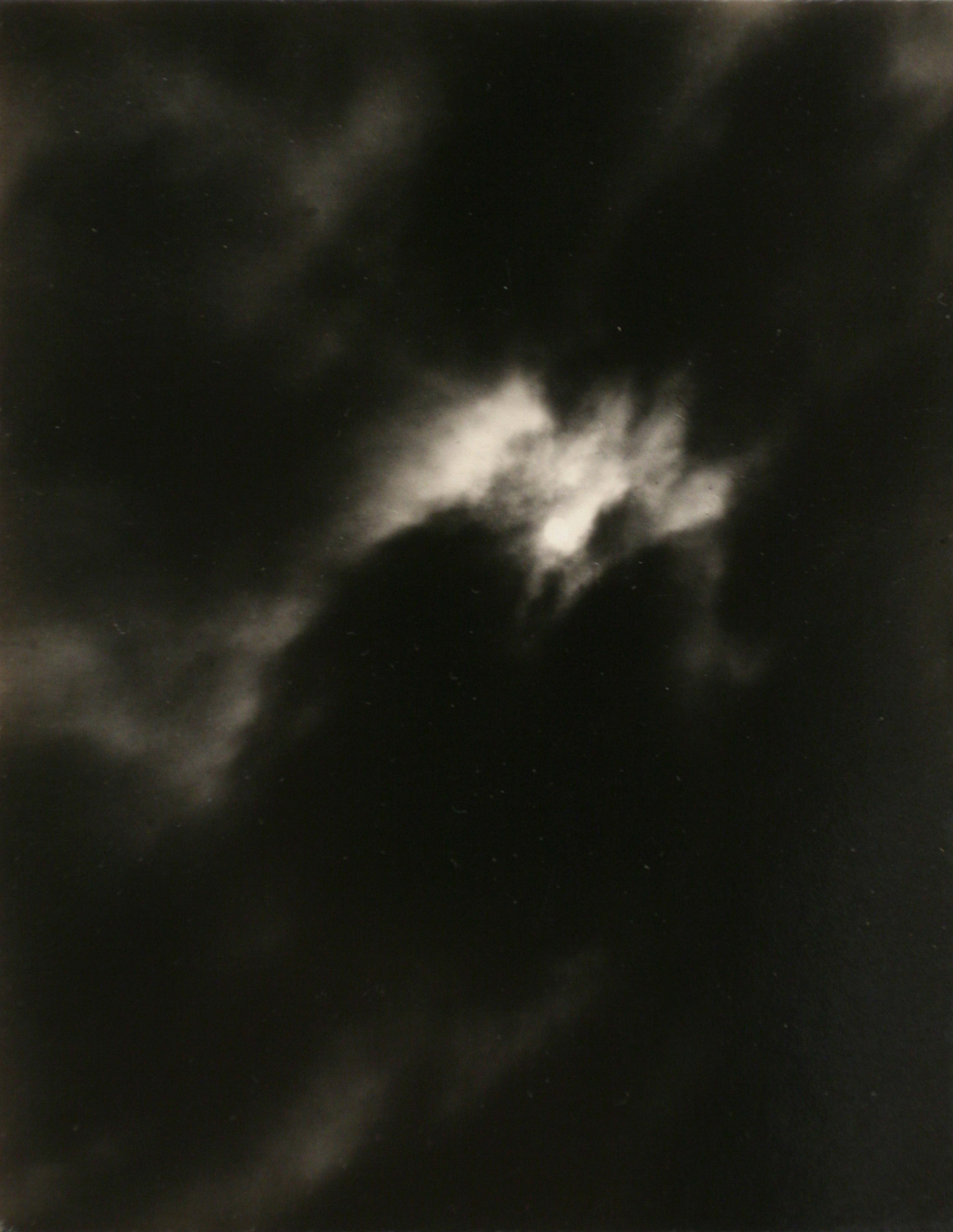
Equivalent Series (c. 1922–1934)Alfred Stieglitz was a towering figure in American modern art, instrumental in establishing photography as a serious fine art and fostering the avant-garde through his galleries, publications, and mentorship. Beginning in 1922 at his Lake George retreat, he devoted more than a decade to photographing clouds, ultimately producing over 300 images that came to be known as his Equivalents series. These works were groundbreaking as some of the first intentionally abstract photographs, freeing subject matter from literal representation and instead expressing emotional and spiritual states. Stieglitz printed them as small, handheld contact prints, often without horizon or orientation, inviting viewers to read the shapes purely as form, not landscape. In doing so he advanced a new vision of American modernism that was not rooted in technology or urban progress, but in inner life and universal experience. By prioritizing gesture, composition, and the expressive potential of form, the Equivalents anticipated concerns central to Abstract Expressionism, predating the movement by two decades and establishing a direct lineage to the ways artists like Aaron Siskind would later explore abstraction as a conduit for emotion and psychological depth.
-
-
Paul Strand (1890-1976)Driftwood #3, Maine, 1928Waxed platinum print mounted to board, printed c. 1928Signed on recto7 5/8 x 9 5/8 in (19.4 x 24.5 cm)
-
Paul Strand (1890–1976)
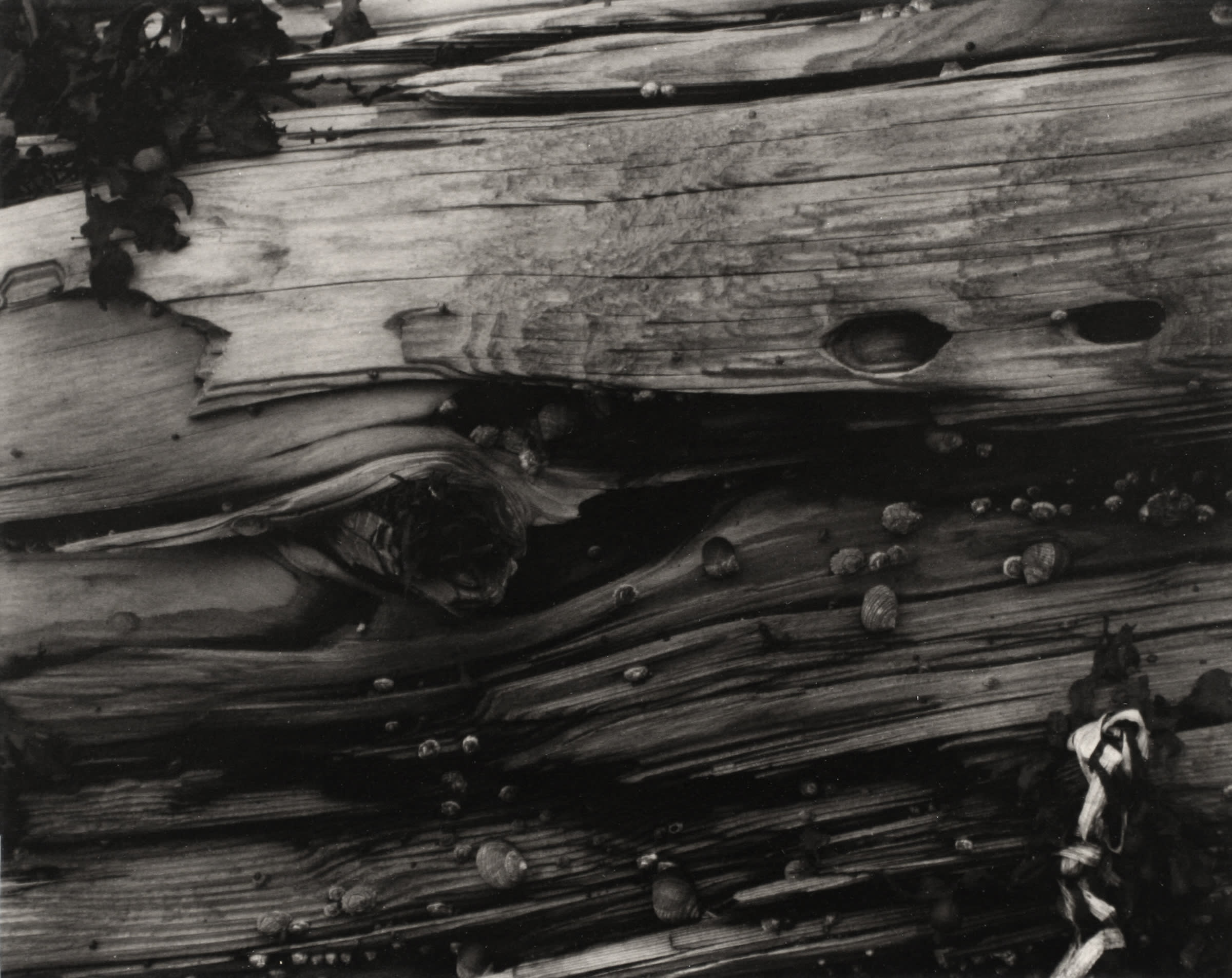
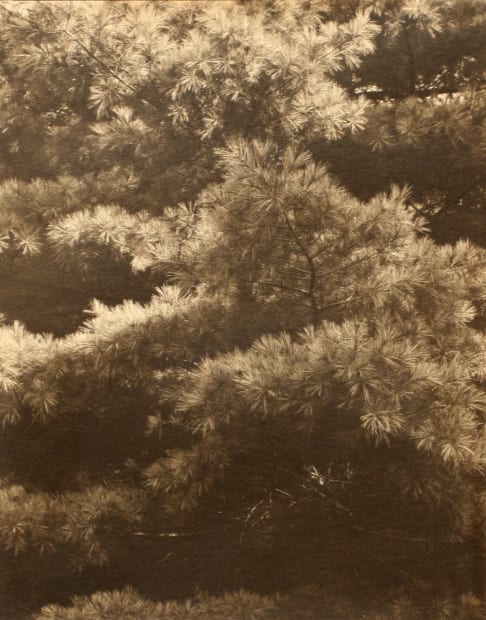
Driftwood #3, Maine, 1928Paul Strand, whose early New York photographs of 1915–17 helped define the foundations of American Modernism, brought the same precision and formal intensity to his close observations of natural materials. In Driftwood #3, Maine, 1928, he isolates a section of weathered wood, emphasizing texture, pattern, and abstract compositional qualities. The image’s careful balance of tonality and its focus on geometric and organic rhythm prefigure the concerns of mid-century abstraction, especially the attention to surface, repetition, and form found in Aaron Siskind’s later work. Strand’s photography blends documentary attention with compositional abstraction, demonstrating that the capacity for formal exploration was present in American photography well before Abstract Expressionism fully developed. -
-
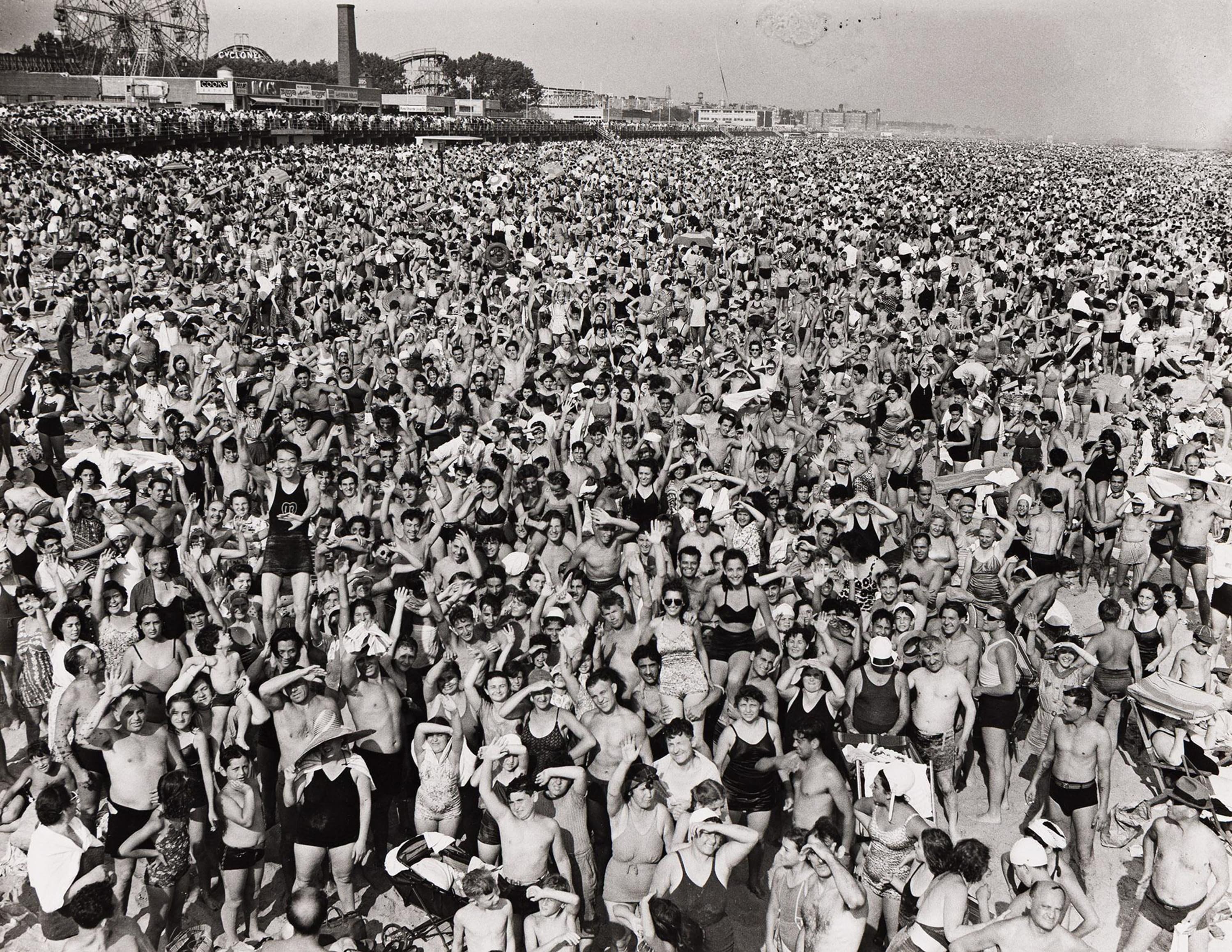
Weegee (1899-1968)Coney Island, 1940Gelatin silver print, printed c. 1960sWeegee's credit in an unknown hand in pencil on verso10 1/2 x 13 5/8 in (26.7 x 34.6 cm)
-
Arthur Fellig (Weegee) (1899–1968)
Coney Island, 1940Weegee, the legendary New York press photographer known for his instinctive timing and unfiltered portrayal of city life, created in Coney Island, 1940 one of the most striking crowd images of the twentieth century. Shot on a sweltering summer day, the photograph compresses tens of thousands of beachgoers into a single dense sweep of faces and bodies, transforming the shoreline into a continuous tapestry of movement and human presence. The sheer accumulation of forms suggests the kind of immersive visual environment that later became central to Abstract Expressionism, especially in the expansive, atmospheric canvases of Norman Lewis, where complexity emerges out of repetition and variation. Through his ability to elevate raw observation into a heightened visual experience, Weegee reveals how documentary photography could anticipate concerns that would shape postwar abstraction. -
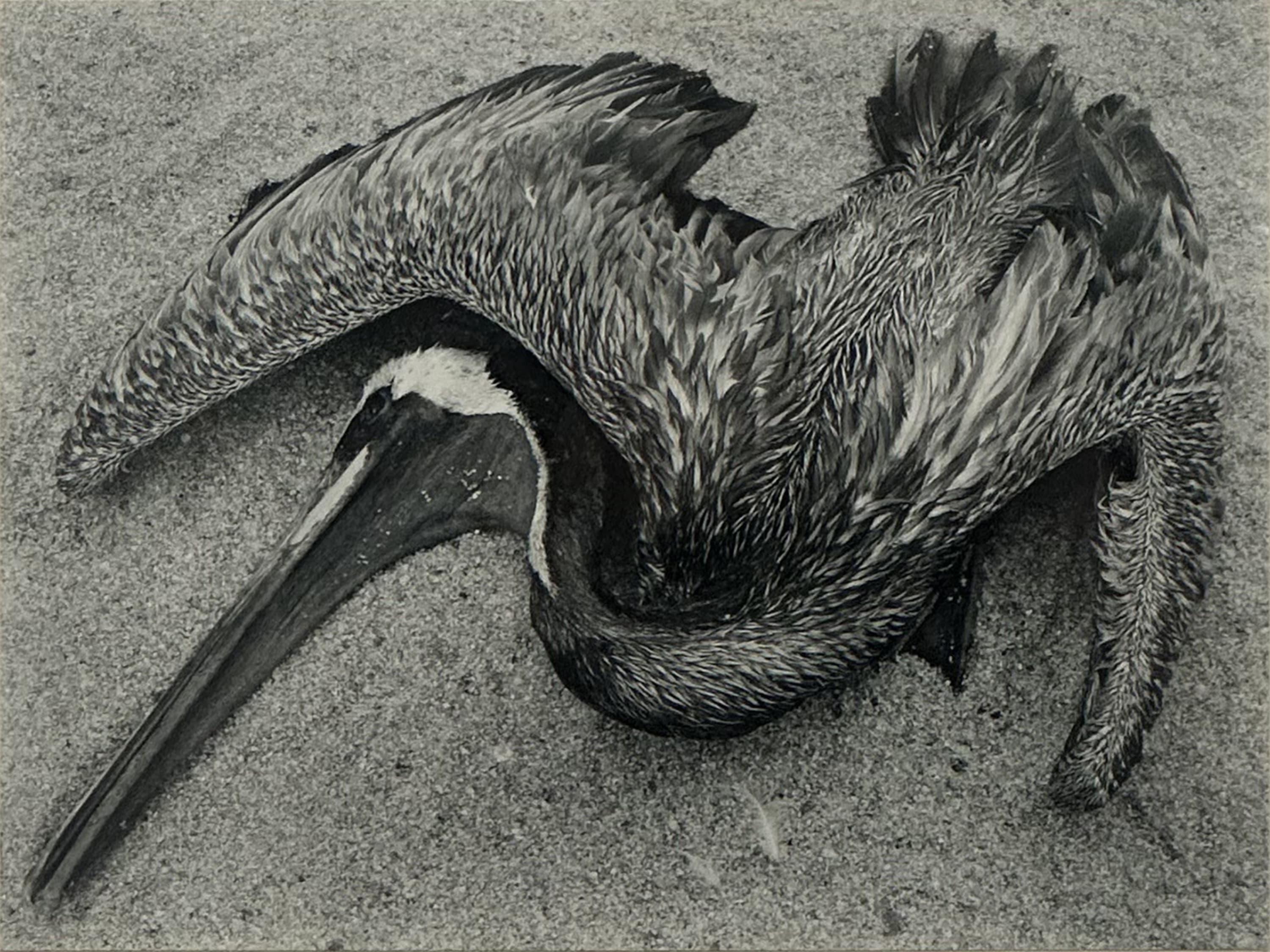
Edward Weston(1886-1958)Dead Pelican, Point Lobos, 1942Vintage gelatin silver print, printed c. 1942Mounted, signed, and dated on record, inscribed 'Jean from all of us-Bea don Charis Edward - Summer of 1942 - O yes-love and kisses" by photographer on verso7 5/8 x 9 5/8 in (19.4 x 24.4 cm)
-
Edward Weston (1886–1958)
Dead Pelican, 1942Edward Weston, a central figure of American photographic modernism and a founding member of Group f/64, photographed natural forms with the extreme sharpness and full depth of field that defined the group’s approach, transforming even the most ordinary or unsettling subjects into distilled studies of structure and form. In Dead Pelican, he positions the bird’s splayed wings, arched neck, and dense feathering against the sand in a flattened, frontal composition that turns the creature’s remains into an almost sculptural arrangement of texture and line. This emphasis on raw physicality, elemental form, and the stripping away of narrative resonates strongly with the work of Clyfford Still, whose monumental canvases evoke torn flesh and primordial force through similarly jagged, organic shapes and charged surfaces. Through this transformation of a found natural subject into a field of expressive and nearly abstract intensity, Weston emerges as a significant precursor to the sensibility later pursued by the Abstract Expressionist painters. -
-
Edward Weston (1886-1958)Clouds, Death Valley, 1938Gelatin silver print mounted to board, printed c. 1938Signed and dated on mount recto
Titled and numbered 'DV-39C-6G' on mount verso7 5/8 x 9 1/2 in (19.4 x 24.1 cm) -
Edward Weston (1886-1958)Wall Scrawls, Hornitos, 1940Gelatin silver print mounted to board, printed c. 1951-1952Initialed and dated on mount recto7 1/2 x 9 1/2 in (19.1 x 24.1 cm)
-
-
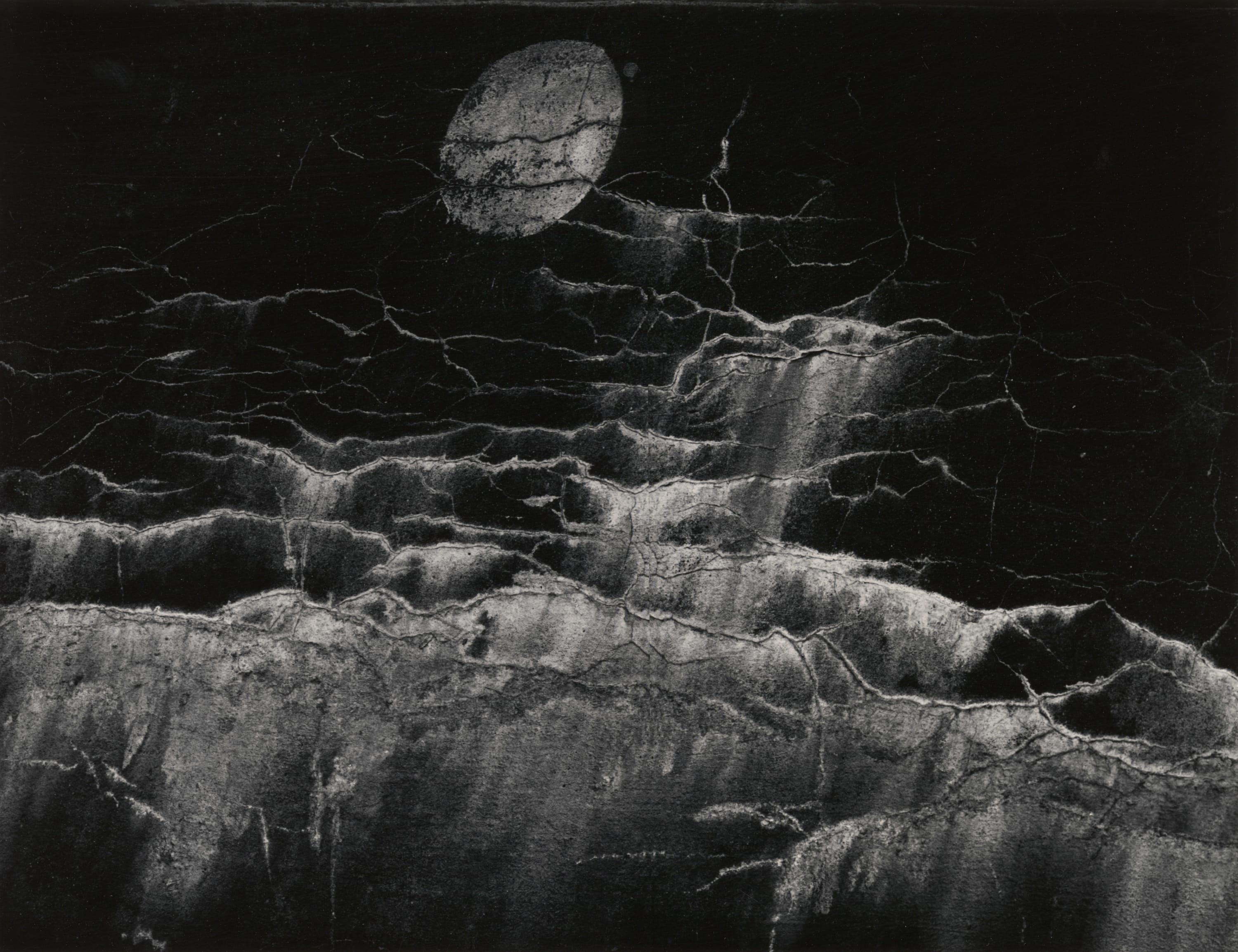
Minor White (1908-1976)Moon and Wall Encrustations, Pultneyville, New York, 1964Gelatin silver print, printed c. 1964Signed in pencil on mount recto
Signed, titled, and dated in pencil on mount verso10 5/8 x 13 3/4 in (27 x 34.9 cm) -
Minor White (1908–1976)
Moon and Wall Encrustations, Pultneyville, New York (May 10, 1964, “Equivalent of Josh”)Minor White saw photography as a means of expressing inner life. In this work he isolates a weathered wall beneath a luminous orb suggestive of the moon, but deliberately avoids literal meaning. The dense textures and quiet glow transform a mundane surface into a metaphorical, psychological space. By titling it the “Equivalent of Josh,” White affirms it as an emotional or spiritual portrait rather than a literal one. His focus on form, tone, and expressive resonance aligns with Abstract Expressionism’s pursuit of the unseen or internal. -
![Manuel Alvarez Bravo (1902-2002) Untitled [Red Graffiti: Skull and Heart], 1960 C-print, printed c. 1960 Signed and annotated on mount...](https://artlogic-res.cloudinary.com/w_3000,c_limit,f_auto,fl_lossy,q_auto/ws-artlogicwebsite1113/usr/images/feature_panels/image/items/bd/bd9d609697884ff7b16f5b7ce4d3c609/mal-00001-sp.jpg)