
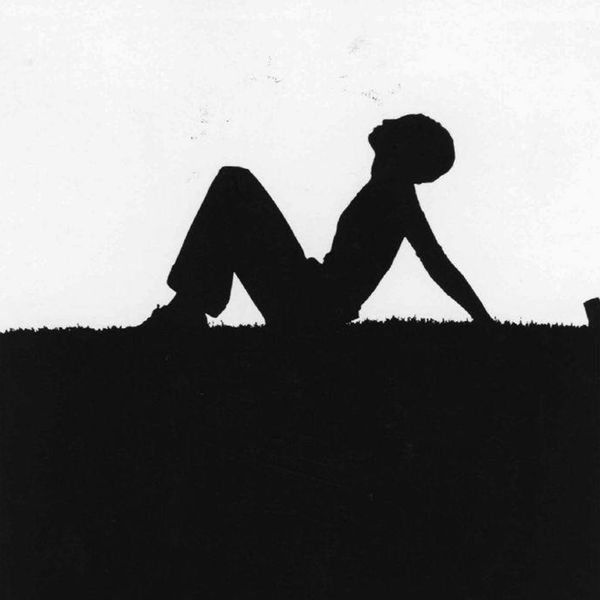
Louis Draper (1935–2002) was a New York–based photographer whose images of Harlem in the 1960s and his role as a founding member of the Kamoinge Workshop established him as an important figure in the history of Black American photography. He photographed the lives of Black Americans in New York alongside leading figures of the civil rights movement, creating a body of work that contributed to a pivotal period in the representation of Black life. Draper understood photography as a form of engaged resistance. “I want to show the strength, the wisdom and the dignity of the Negro people,” he wrote. “I do not want a documentary or sociological statement, I want a creative expression, the kind of penetrating insight and understanding of Negroes which I believe only a Negro photographer can interpret.”
Born in Richmond, Virginia, in 1935 and raised in Henrico County, Draper attended the Virginia Randolph School and Virginia State College, where he became a photographer for the student newspaper and began taking pictures in the early 1950s. The Museum of Modern Art’s 1955 exhibition The Family of Man, and its accompanying catalogue, inspired him to move to New York. He arrived in 1957 and enrolled at the New York Institute of Photography, where he studied with W. Eugene Smith. He also took classes at New York University’s Institute of Film and Television and attended Harold Feinstein’s Photography Aesthetics workshop. In New York, he developed relationships with Langston Hughes, his neighbor, and the photographer Roy DeCarava.
In the autumn of 1963, two groups of Black photographers came together in New York to form the Kamoinge Workshop. Draper belonged to both groups and played a central role in the workshop’s founding. Its name, drawn from the Gikuyu language of Kenya, means a group of people acting together; Kenya had gained independence that same year. Roy DeCarava was invited to serve as the group’s first director, becoming a mentor and friend to its members. The workshop included Anthony Barboza, Adger Cowans, Daniel Dawson, Al Fennar, Ray Francis, Herman Howard, Jimmie Mannas, Herb Randall, Herb Robinson, Beuford Smith, Ming Smith, Shawn Walker, and Calvin Wilson.
Working across street photography, abstraction, and portraiture, Kamoinge’s members represented African American and African communities with a sense of agency, countering depictions that reduced their subjects to victims of social and political oppression. An early statement described photographers whose creative objectives reflected “a concern for truth about the world, about the Society, and about themselves.” Aware of the forces for change surrounding Kamoinge, Draper later wrote, “we dedicated ourselves to speak of our lives as only we can.” He chronicled the workshop in writing as well as in photographs, leaving records that remain a principal source for understanding its formative years.
Alongside his street photography, Draper made portraits and photojournalistic work, including assignments for Essence. His subjects included Fannie Lou Hamer, Malcolm X, Miles Davis, John Coltrane, and Langston Hughes. He worked between Harlem, New Jersey, and Senegal, travelling to the latter in 1977 and 1978. From 1982 until his death in 2002, he taught at Mercer County Community College. His photographs appeared in several volumes of The Black Photographers Annual.
In 2015, the Virginia Museum of Fine Arts acquired Draper’s complete archive through the Louis H. Draper Preservation Trust. The museum was the first major institution to present an exhibition devoted to Draper and the Kamoinge Workshop’s early years. Bruce Silverstein Gallery is the exclusive representative of the Trust and presented True Grace in 2020, its first exhibition following the announcement of the representation. The exhibition brought together fifty lifetime gelatin silver prints spanning the late 1950s through the 1990s.


-

Black Photojournalism
Glasstire, March 4, 2026 -
Historic photographs from the heyday of the Black press
Miss Rosen, Huck, February 23, 2026 -
Mid-Century Black Photographers Show Us How Far We Have, and Haven’t, Come in a New Show at the Getty Center
Sophie Lee, Cultured, February 20, 2026 -
Black Photojournalism
Stephen Frailey, The Brooklyn Rail , January 14, 2026 -
‘Black Photojournalism’ Review: Pictures Without Prejudice at the Carnegie Museum of Art
William Meyers, The Wall Street Journal, September 27, 2025 -
HOW AN OVERLOOKED BLACK COLLECTIVE CARVED OUT PATHWAYS FOR A NEW GENERATION OF PHOTOGRAPHERS
Eva Recinos, LA Times, August 17, 2022 -
GETTY MUSEUM OPENS MARVELOUS KAMOINGE WORKSHOP PHOTOGRAPHY SHOW - LOS ANGELES TIMES
Christopher Knight, LA Times, July 31, 2022 -
WORKING TOGETHER: THE PHOTOGRAPHERS OF THE KAMOINGE WORKSHOP AT THE GETTY CENTER
Getty Center, July 19, 2022 -
THE UNKNOWN RADICALS OF BLACK PHOTOGRAPHY
Barry Schwabsky, The Nation, February 15, 2021 -
'TAKE BEAUTIFUL PICTURES OF OUR PEOPLE'
Siddhartha Mitter, The New York Times, December 22, 2020 -
ADGER COWANS, LOUIS DRAPER, JIMMIE MANNAS, AND HERB ROBINSON FEATURED IN WORKING TOGETHER: THE PHOTOGRAPHERS OF THE KAMO
The Whitney Museum of American Art, November 21, 2020 -
VISIONS OF BLACKNESS: NEW YORK'S PHOTOGRAPHY PIONEERS
The Guardian, March 25, 2020 -
WORKING TOGETHER: LOUIS DRAPER AND THE KAMOINGE WORKSHOP
Virginia Museum of Fine Arts, February 1, 2020



-
Black Photojournalism
Amon Carter Museum of American Art 15 Mar - 5 Jul 2026 Outside ExhibitionsBlack Photojournalism shines a light on the groundbreaking work of more than 60 photographers working across the United States in the world-changing decades between 1945 and the mid-1980s. Featuring over...Read more -
Photography and the Black Arts Movement, 1955–1985
J. Paul Getty Museum at the Getty Center 24 Feb - 14 Jun 2026 Outside ExhibitionsAmid the turbulent decades of the mid-20th century, African American and Afro-Atlantic diaspora artists sought to celebrate a distinctly Black culture and advance the struggle for civil rights. Photographic images...Read more -
Photography and the Black Arts Movement, 1955–1985
National Gallery of Art - West Building 21 Sep 2025 - 11 Jan 2026 Outside ExhibitionsUniting around civil rights and freedom movements of the 1960s and 1970s, many visual artists, poets, playwrights, musicians, photographers, and filmmakers expressed hope and dignity through their art. These creative...Read more -
Black Photojournalism
CARNEGIE MUSEUM OF ART - HEINZ GALLERIES 13 Sep 2025 - 19 Jan 2026 Outside ExhibitionsBlack Photojournalism presents work by nearly 60 photographers chronicling historic events and daily life in the United States from the conclusion of World War II in 1945 to the presidential...Read more -
Summer Glow
11 Jul - 7 Sep 2024In photography, light is the medium’s essence, shaping each photograph’s composition, mood, texture, and depth. During the long days of summer, light evolves from the soft, diffused glow of the...Read more -
Working Together: The Photographers of the Kamoinge Workshop
Getty Center 19 Jul - 9 Oct 2022 Outside ExhibitionsRead more -
Working Together: The Photographers of the Kamoinge Workshop
Cincinnati Art Museum 25 Feb - 15 May 2022 Outside ExhibitionsRead more -
Working Together: The Photographers of the Kamoinge Workshop
Whitney Museum of American Art 21 Nov 2020 - 28 Mar 2021Read more -
Louis Draper
True Grace 9 Jan - 22 Feb 2020Bruce Silverstein is pleased to present Louis Draper True Grace . This is the gallery's first exhibition of the artist's work since announcing exclusive representation. The show will include fifty...Read more


-

AIPAD 2026
23 - 26 Apr 2026BOOTH B01 For hours and events, visit AIPAD . Thursday, 4pm - Chester Higgins will be in our booth to talk about his photography. Friday,...Read more -

ART BASEL MIAMI BEACH 2025
Pioneers of AbEx Photography; In Memoriam David Anfam (1955-2024) 3 - 7 Dec 2025BOOTH G3Read more -

PARIS PHOTO 2023
5 Nov 2023 - 10 Feb 2024In a profound celebration of indigenous art and heritage, Bruce Silverstein Gallery is proud to present the works of two remarkable Native American artists, Sarah...Read more -

AIPAD 2023
30 Mar - 2 Apr 2023Read more -

AIPAD 2022
20 - 22 May 2022Read more -

PARIS PHOTO 2019
7 - 10 Nov 2019Bruce Silverstein Gallery is pleased to present an exhibition that will include both iconic and lesser known photographs by some of the most important photographic...Read more -

ART BASEL 2013
13 - 16 Jun 2013For Art Basel 44 Bruce Silverstein Gallery would be pleased to present an exhibition of masterworks from the photographic medium. We will be featuring historically...Read more