
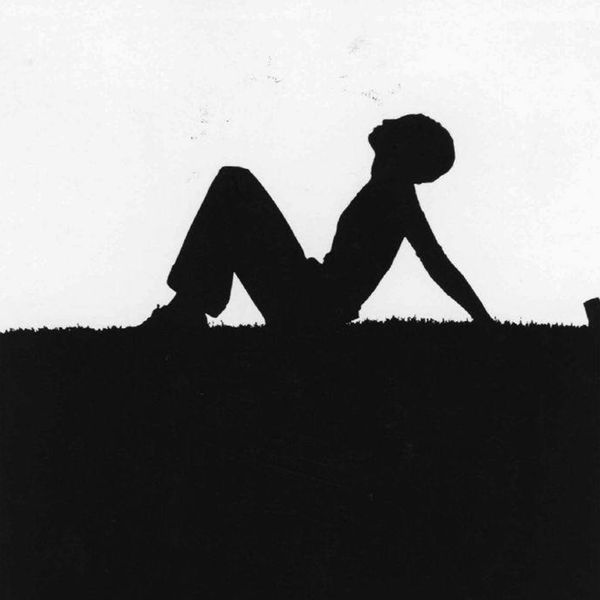
American photographer Louis Draper (1935 - 2002) was a New York-based artist known for his images of Harlem in the 1960s and was a founding member of the influential Kamoinge Workshop. Documenting the lives of Black Americans in New York City as well as iconic figures of the civil rights movement, Draper’s work unequivocally contributed to the critical era of Black American representation in photography. Of his work, Draper wrote; “I want to show the strength, the wisdom, [and] the dignity of the Negro people…I do not want a documentary or sociological statement, I want a creative expression, the kind of penetrating insight and understanding of Negros which I believe only a Negro photographer can interpret.”
Born in Virginia in 1935, Draper began pursuing photography while attending Virginia State College (now University) in the early 1950s. He joined the school newspaper, becoming a cameraman for the publication. After being utterly inspired by the Museum of Modern Art’s 1955 exhibition and accompanying catalogue, The Family of Man, Draper decided to go to New York City to become a photographer. He moved to Harlem in 1957 where he enrolled at the New York Institute of Photography and studied under W. Eugene Smith. Working between Harlem and New Jersey, Draper taught at Mercer County Community College from 1982 to the end of his life in 2002. His resounding influence on the evolution of Black American photography of the 20th century was precipitated in part from his founding of the Kamoinge Workshop in 1960 with Ray Francis. A New York-based collective of Black photographers, Kamoinge, translating to “group effort” from the Gikuyu language of the Kikuyu people in Kenya, grew to include fellow contemporaries Anthony Barboza, Adger Cowans, Danny Dawson, Al Fennar, Herman Howard, Earl James, Jimmy Mannas, Herbert Randall, Herb Robinson, Beuford Smith, Ming Smith, Larry Stewart, Shawn Walker, and Calvin Wilson. The motivation of the Workshop was to avoid prevalent racial stereotypes in contemporary media and the typical violent coverage of the Civil Rights Movement, emphasizing instead the positivity and warmth of Black American communities and individuals, in alignment with the wider acceptance of photography as an artistic medium.
In addition to photographing everyday street-life, Draper’s portraiture and photojournalism for Essence magazine led him to photograph cultural icons such as Fannie Lou Hamer, Malcolm X, Miles Davis, John Coltrane, and Langston Hughes. During his lifetime, Draper had solo exhibitions at Image Gallery, New York, and the Photo Workshop Center for Photography, New Jersey. Work from the Kamoinge Workshop, featuring Draper’s photography, has been exhibited at the Whitney Museum of American Art, New York; International Center of Photography, New York; the George Eastman House, New York; the Studio Museum in Harlem, New York; The New York Public Library; and Harvard University, among other institutions. Draper’s work is held in several public collections, including The Museum of Modern Art, New York; the Whitney Museum of American Art, New York; the George Eastman House, New York; the Afro-American Museum of Art and Culture, Chicago; the Schomburg Center for Research in Black Culture; and the New York Public Library.


-

Black Photojournalism
Glasstire, March 4, 2026 -
Historic photographs from the heyday of the Black press
Miss Rosen, Huck, February 23, 2026 -
Mid-Century Black Photographers Show Us How Far We Have, and Haven’t, Come in a New Show at the Getty Center
Sophie Lee, Cultured, February 20, 2026 -
Black Photojournalism
Stephen Frailey, The Brooklyn Rail , January 14, 2026 -
‘Black Photojournalism’ Review: Pictures Without Prejudice at the Carnegie Museum of Art
William Meyers, The Wall Street Journal, September 27, 2025 -
HOW AN OVERLOOKED BLACK COLLECTIVE CARVED OUT PATHWAYS FOR A NEW GENERATION OF PHOTOGRAPHERS
Eva Recinos, LA Times, August 17, 2022 -
GETTY MUSEUM OPENS MARVELOUS KAMOINGE WORKSHOP PHOTOGRAPHY SHOW - LOS ANGELES TIMES
Christopher Knight, LA Times, July 31, 2022 -
WORKING TOGETHER: THE PHOTOGRAPHERS OF THE KAMOINGE WORKSHOP AT THE GETTY CENTER
Getty Center, July 19, 2022 -
THE UNKNOWN RADICALS OF BLACK PHOTOGRAPHY
Barry Schwabsky, The Nation, February 15, 2021 -
'TAKE BEAUTIFUL PICTURES OF OUR PEOPLE'
Siddhartha Mitter, The New York Times, December 22, 2020 -
ADGER COWANS, LOUIS DRAPER, JIMMIE MANNAS, AND HERB ROBINSON FEATURED IN WORKING TOGETHER: THE PHOTOGRAPHERS OF THE KAMO
The Whitney Museum of American Art, November 21, 2020 -
VISIONS OF BLACKNESS: NEW YORK'S PHOTOGRAPHY PIONEERS
The Guardian, March 25, 2020 -
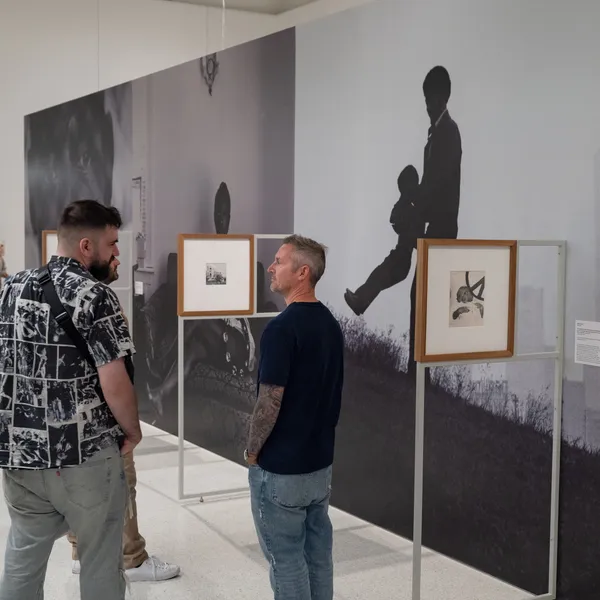
WORKING TOGETHER: LOUIS DRAPER AND THE KAMOINGE WORKSHOP
Virginia Museum of Fine Arts, February 1, 2020



-
Black Photojournalism
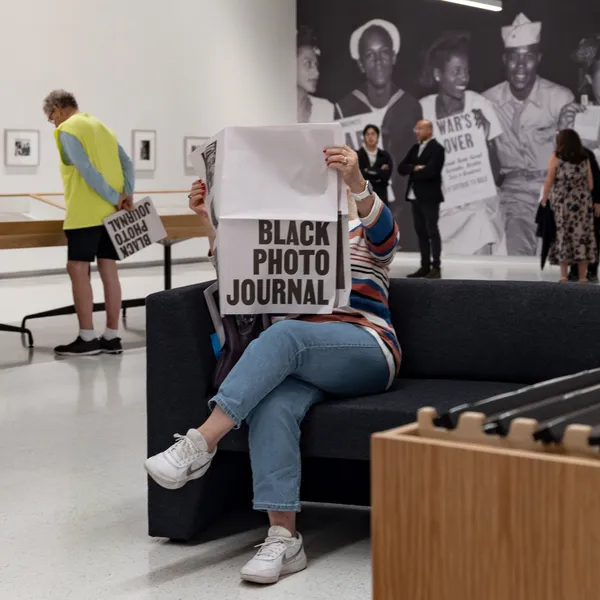
Amon Carter Museum of American Art 15 Mar - 5 Jul 2026 Outside ExhibitionsBlack Photojournalism shines a light on the groundbreaking work of more than 60 photographers working across the United States in the world-changing decades between 1945 and the mid-1980s. Featuring over...Read more -
Photography and the Black Arts Movement, 1955–1985
J. Paul Getty Museum at the Getty Center 24 Feb - 14 Jun 2026 Outside ExhibitionsAmid the turbulent decades of the mid-20th century, African American and Afro-Atlantic diaspora artists sought to celebrate a distinctly Black culture and advance the struggle for civil rights. Photographic images...Read more -
Photography and the Black Arts Movement, 1955–1985
National Gallery of Art - West Building 21 Sep 2025 - 11 Jan 2026 Outside ExhibitionsUniting around civil rights and freedom movements of the 1960s and 1970s, many visual artists, poets, playwrights, musicians, photographers, and filmmakers expressed hope and dignity through their art. These creative...Read more -
Black Photojournalism
CARNEGIE MUSEUM OF ART - HEINZ GALLERIES 13 Sep 2025 - 19 Jan 2026 Outside ExhibitionsBlack Photojournalism presents work by nearly 60 photographers chronicling historic events and daily life in the United States from the conclusion of World War II in 1945 to the presidential...Read more -
Summer Glow
11 Jul - 7 Sep 2024In photography, light is the medium’s essence, shaping each photograph’s composition, mood, texture, and depth. During the long days of summer, light evolves from the soft, diffused glow of the...Read more -
Working Together: The Photographers of the Kamoinge Workshop
Getty Center 19 Jul - 9 Oct 2022 Outside ExhibitionsRead more -
Working Together: The Photographers of the Kamoinge Workshop
Cincinnati Art Museum 25 Feb - 15 May 2022 Outside ExhibitionsRead more -
Working Together: The Photographers of the Kamoinge Workshop
Whitney Museum of American Art 21 Nov 2020 - 28 Mar 2021Read more -
Louis Draper
True Grace 9 Jan - 22 Feb 2020Bruce Silverstein is pleased to present Louis Draper True Grace . This is the gallery's first exhibition of the artist's work since announcing exclusive representation. The show will include fifty...Read more


-

AIPAD 2026
23 - 26 Apr 2026BOOTH B01 For hours and events, visit AIPAD . Thursday, 4pm - Chester Higgins will be in our booth to talk about his photography. Friday,...Read more -

ART BASEL MIAMI BEACH 2025
Pioneers of AbEx Photography; In Memoriam David Anfam (1955-2024) 3 - 7 Dec 2025BOOTH G3Read more -

PARIS PHOTO 2023
5 Nov 2023 - 10 Feb 2024In a profound celebration of indigenous art and heritage, Bruce Silverstein Gallery is proud to present the works of two remarkable Native American artists, Sarah...Read more -

AIPAD 2023
30 Mar - 2 Apr 2023Read more -

AIPAD 2022
20 - 22 May 2022Read more -

PARIS PHOTO 2019
7 - 10 Nov 2019Bruce Silverstein Gallery is pleased to present an exhibition that will include both iconic and lesser known photographs by some of the most important photographic...Read more -

ART BASEL 2013
13 - 16 Jun 2013For Art Basel 44 Bruce Silverstein Gallery would be pleased to present an exhibition of masterworks from the photographic medium. We will be featuring historically...Read more

Afro-American Museum of Art and Culture, Chicago, IL; The Cleveland Museum of Art, Cleveland, OH; Detroit Institute of Arts, Detroit, MI; George Eastman House, Rochester, NY; Harlem Art Collection, the Harlem State Office Building, New York, NY; Robert B. Menschel Photography Gallery, Syracuse University, NY; The Museum of Modern Art, New York, NY; Schomberg Center for Research in Black Culture, the New York Public Library, NY; Smithsonian Institution, Washington DC; University of Ghana; University of Mexico, Mexico City; The Whitney Museum of American Art, New York, NY