
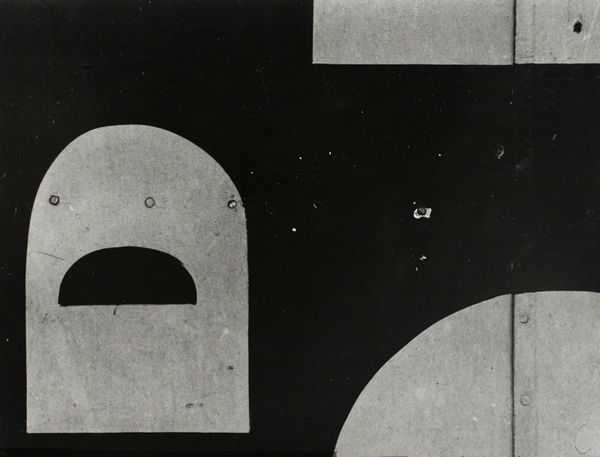
Aaron Siskind (1903–1991), artist and educator, holds a preeminent place in the history of American photography. He was the only photographer fully integrated into the Abstract Expressionist circle, drawing inspiration from and inspiring painters including Willem de Kooning, Franz Kline and Barnett Newman, and in 1951 he was the only photographer included in the Ninth Street Show, the exhibition that announced the movement. He radicalized the medium by establishing photography’s potential as an abstract form of expression and an aesthetic end in itself. His photographs are not purely abstract. He photographed recognizable places and things in a way that made them a new means of communicating ideas and feelings.
Siskind came to photography late and by accident. Born in New York in 1903, he studied literature at the City College of New York, graduating in 1926, intending to be a poet, and taught English in the public schools for more than two decades. A camera given to him by his father-in-law as a wedding present, to record the sights of his honeymoon, opened the world to him. He joined the New York Photo League in 1932 and from 1936 to 1940 led its Feature Group, producing the Harlem Document, Dead End: The Bowery and Portrait of a Tenement.
By the mid-1940s he had turned away from social realism, and what followed was one of the most complete transformations in twentieth-century photography. Working at Gloucester and Martha’s Vineyard, he began isolating and enlarging fragments of the built and weathered world: stains, peeling paint, graffiti, torn posters, rope and ironwork. Only after the external world had been exhausted, as the gallery puts it, did he begin using it as a means of internal self-exploration, harnessing the associative powers of vernacular objects.
Barnett Newman sent him to the dealer Charles Egan, and the exhibition Egan gave him in April 1947 was the first showing of photography at a gallery otherwise devoted to painters. Four more followed through June 1954, in a program that gave Willem de Kooning his first American show and took on Robert Rauschenberg. For those exhibitions Siskind mounted his prints flush to thick Masonite panels, often on wooden stretchers, so that they would carry depth and hold a wall the way a canvas does rather than sit behind glass like a document. He became close to Franz Kline and Mark Rothko, and the work entered the conversation of American painting rather than that of documentary photography. Teaching was the other half of the practice. At Harry Callahan’s invitation he joined the Institute of Design in Chicago in 1951, took over the photography program in 1961, and followed Callahan to the Rhode Island School of Design in 1971, teaching until 1976.
Siskind was a founding member of the Society for Photographic Education and, with Nathan Lyons, of the Visual Studies Workshop in 1969, and a Guggenheim Fellowship in 1966 funded a period in Rome. He photographed into his eighties, travelling repeatedly to Mexico and Italy and returning throughout his life to the divers of Pleasures and Terrors of Levitation, begun in the early 1950s. A centennial in 2003 and 2004 was marked by exhibitions at more than a dozen American institutions, each devoted to a different period or theme.
Bruce Silverstein Gallery has shown the work in REWIND (2021), Drawing the Line (2019), Monochrome (2017), Songs and the Sky (2016), Inscribed (2015), Remnants (2013), DISCOVERIES (2010) and Discoveries (2009).


-

How Three Friends Turned Photography into a Way of Life
Michael Londres, aperture, July 31, 2026 -
ART BASEL MIAMI 2025 | Highlighting Lens-based Work in Meridians
Victoria Gonzalez and Milly Watson, MUSÉE, December 4, 2025 -
Rare Basquiat Photos and More Art to See in Miami This Week
Valentina Di Liscia, Hyperallergic, December 1, 2025 -
Brilliant Things to Do This August
AnOther Magazine Featuring 'In Sequence'Daisy Woodward, AnOther Magazine, August 4, 2025 -
In Sequence | Bruce Silverstein Gallery
Amy Wei , Musee Magazine, June 23, 2025 -
Photographer as Sculptor, Sculptor as Photographer
Rosario Ana Vizoli, Meer, June 10, 2025 -
Photographer as Sculptor, Sculptor as Photographer @ Bruce Silverstein
Just the FactsLoring Knoblauch , Collector Daily , May 30, 2025 -
Photographer as Sculptor, Sculptor as Photographer
ReviewGreer Valaquenta, Musée Magazine, May 1, 2025 -
Exhibition at Bruce Silverstein's new space explores the fascinating intersection on photography and sculpture
Art Daily, April 10, 2025 -
Bruce Silverstein Gallery: Photographer as Sculptor, Sculptor as Photographer
The Eye of Photography, April 7, 2025 -
EXHIBITION REVIEW: REWIND: 20TH ANNIVERSARY SHOW
Emily Capone, Musée: Vanguard of Photography Culture, January 10, 2022 -
AARON SISKIND FOUNDATION TRANSFERS 8,000-WORK COLLECTION TO VIRGINIA'S MUSEUM OF FINE ARTS
Artforum, January 20, 2020 -
THE BARNETT AND ANNALEE NEWMAN FOUNDATION GIVES ART AND $10 MILLION TO THE JEWISH MUSEUM
Broadway World, June 12, 2018 -
SHAPE OF LIGHT: 100 YEARS OF PHOTOGRAPHY AND ABSTRACT ART
Tate, April 30, 2018 -
AARON SISKIND: LEAP BEFORE YOU LOOK: BLACK MOUNTAIN COLLEGE 1933–1957
Richard Deming, Artforum, March 1, 2017 -
BARBARA MORGAN, AARON SISKIND, FREDERICK SOMMER
Royal Academy, September 24, 2016 -
AARON SISKIND AT THE DAVIS MUSEUM OF ART
The Davis Museum of Art, September 15, 2016 -
REVIEW BY L'OEIL DE LA PHOTOGRAPHIE Songs and the Sky
The Eye of Photography, May 30, 2016 -
AARON SISKIND, FREDERICK SOMMER, AND KEITH SMITH AT MORGAN LIBRARY AND MUSEUM
The Morgan Library, March 25, 2016 -
AARON SISKIND: ABSTRACTIONS
Art Institute of Chicago , March 16, 2016 -
NYU TISCH SCHOOL OF ART: AARON SISKIND & LISETTE MODEL
NYU Tisch, July 31, 2015 -
AARON SISKIND AT PHILADELPHIA MUSEUM OF ART
Philadelphia Museum of Art, June 17, 2015 -
AARON SISKIND AT PAVILION POPULAIRE
Montpellier, November 28, 2014 -
ANDRÉ KERTÉSZ AND AARON SISKIND AT THE NASHER MUSEUM OF ART
Nasher Museum, February 14, 2013 -
AARON SISKIND AT THE VIRGINIA MUSEUM OF FINE ARTS
Virginia Museum of Fine Arts, January 12, 2013 -
VMFA Aaron Siskind Award for Photography
1 Month Left to SubmitVirginia Museum of Fine Arts




-
Photography as a Way of Life: Minor White, Aaron Siskind, and Harry Callahan
Princeton University Art Museum 19 Apr - 7 Sep 2026 Outside ExhibitionsAmid exploding markets for Kodak’s snapshots and Magnum’s decisive moments, White, Siskind, and Callahan shared inclinations toward abstraction and toward deeply personal photographs. Seeking to carve out a new role...Read more -
In Sequence
26 Jun - 29 Aug 2025 Gallery ExhibitionsBruce Silverstein Gallery is pleased to present In Sequence , a group exhibition that brings together the works of Adger Cowans, Elger Esser, Todd Hido, Dakota Mace, Barbara Morgan, Ed...Read more -
Photographer as Sculptor, Sculptor as Photographer
10 Apr - 14 Jun 2025 Gallery ExhibitionsBruce Silverstein Gallery is pleased to present Photographer as Sculptor, Sculptor as Photographer , the inaugural exhibition of its new gallery space. This exhibition brings together sculptures and photographs by...Read more -
Summer Glow
11 Jul - 7 Sep 2024In photography, light is the medium’s essence, shaping each photograph’s composition, mood, texture, and depth. During the long days of summer, light evolves from the soft, diffused glow of the...Read more -
20th Anniversary Exhibition
REWIND 16 Dec 2021 - 19 Feb 2022 Gallery ExhibitionsBruce Silverstein Gallery is pleased to announce REWIND , a celebration of our 20th anniversary. Featuring works selected from over one hundred exhibitions, REWIND is an opportunity to revisit the...Read more -
Drawing the Line
11 Jul - 30 Aug 2019 Gallery ExhibitionsBruce Silverstein Gallery is pleased to announce a group exhibition featuring works by Harry Callahan, Germaine Krull, Shinichi Maruyama, Barbara Morgan, Sigmar Polke, Man Ray, Aaron Siskind, Keith A. Smith,...Read more -
Monochrome
20 Jan - 4 Mar 2017 Gallery ExhibitionsBruce Silverstein Gallery is pleased to present MONOCHROME, an exhibition including works by Alfred Leslie, Barbara Morgan, Louise Nevelson, Man Ray, Aaron Siskind, Frederick Sommer and John Wood.Read more -
Songs and the Sky
An Exhibition of Art and Music 28 Apr - 25 Jun 2016 Gallery ExhibitionsBruce Silverstein Gallery is pleased to present Songs and the Sky , an exhibition of art and music.Read more -
Inscribed
10 Dec 2015 - 23 Jan 2016 Gallery ExhibitionsBruce Silverstein / 20 is pleased to present Inscribed .Read more -
Remnants
Louise Nevelson and Aaron Siskind 19 Sep - 2 Nov 2013 Gallery ExhibitionsBruce Silverstein is pleased to present, Remnants: Louise Nevelson & Aaron Siskind , an exhibition featuring sculptures by Nevelson and photographs by Siskind displayed in conversation. The exhibition focuses on...Read more -
DISCOVERIES
A special selection of extraordinary photographs from the gallery's private inventory 8 Jul - 6 Aug 2010 Gallery ExhibitionsBruce Silverstein Gallery is pleased to announce DISCOVERIES, an exhibition featuring an eclectic selection of rare and noteworthy works by 35 known and lesser-known artists from the 20 th century.Read more -
Discoveries
A special selection of extraordinary photographs from the gallery's private inventory 16 Jun - 8 Aug 2009 Gallery ExhibitionsBruce Silverstein Gallery is pleased to announce DISCOVERIES , an exhibition featuring an eclectic selection of rare and noteworthy works by lesser-known artists from the 20th century.Read more -
Aaron Siskind
Recurrence 15 Jan - 7 Mar 2009 Gallery ExhibitionsBruce Silverstein is pleased to announce Aaron Siskind: Recurrence , an exhibition of works exploring the initial development and further evolution of recurring forms, themes, and line-gestures appearing and reappearing...Read more -
Aaron Siskind
Transformation 21 Jun - 31 Aug 2001 Gallery ExhibitionsThe Bruce Silverstein Gallery is pleased to announce the exhibit Aaron Siskind: Transformation.Read more


-

Paris Photo 2026
11 - 15 Nov 2026Opening Wednesday, November 11, 2026 (by invitation only) Collectors Circle: 11 a.m. – 9 p.m. VIP: 2pm – 9pm Early Access Collectors Circle & VIP...Read more -

The Armory Show 2026
24 - 27 Sep 2026Booth 310 For hours and events visit The Armory ShowRead more -

AIPAD 2026
23 - 26 Apr 2026BOOTH B01 For hours and events, visit AIPAD . Thursday, 4pm - Chester Higgins will be in our booth to talk about his photography. Friday,...Read more -

ART BASEL MIAMI BEACH 2025
Pioneers of AbEx Photography; In Memoriam David Anfam (1955-2024) 3 - 7 Dec 2025BOOTH G3Read more -

Paris Photo 2025
12 - 16 Nov 2025Read more -

PARIS PHOTO 2024
5 - 10 Nov 2024Read more -

AIPAD 2023
30 Mar - 2 Apr 2023Read more -

THE ARMORY SHOW 2021
9 - 12 Sep 2021For The Armory Show 2021, Bruce Silverstein Gallery will present photographic and painted material focusing on New York from the 1960s to 1980s. The installation...Read more -

PARIS PHOTO 2019
7 - 10 Nov 2019Bruce Silverstein Gallery is pleased to present an exhibition that will include both iconic and lesser known photographs by some of the most important photographic...Read more -

AIPAD 2019
4 - 7 Apr 2019Read more -

PARIS PHOTO 2018
8 - 11 Nov 2018Recognized today as one of the most influential figures in modern photography, the Hungarian artist, designer and educator, György Kepes (1906-2001) was one of the...Read more -

FRIEZE MASTERS 2018
4 - 7 Oct 2018For Frieze Masters 2018, Bruce Silverstein Gallery would be pleased to present a selection of photographic masterpieces from the twentieth century created in the spirit...Read more -

AIPAD 2018
5 - 8 Apr 2018Read more -

THE ARMORY SHOW 2018
8 Mar 2018 - 11 Mar 2019Read more -

FRIEZE MASTERS 2017
5 - 8 Oct 2017For Frieze Masters 2017, Bruce Silverstein proposes a curated exhibition featuring significant photographic works by Constantin Brancusi, Alfred Leslie, Rene Magritte, Man Ray, Henry Moore,...Read more -

THE ARMORY SHOW 2017
2 - 5 Mar 2017For The Armory Show 2017 Bruce Silverstein Gallery will present an exhibition of paintings and photographs by Alfred Leslie, Paul Outerbridge, Eric Fischl, Todd Hido,...Read more -

PARIS PHOTO 2016
10 - 13 Nov 2016Bruce Silverstein Gallery is pleased to present at Paris Photo an exhibition inspired by one of the cornerstones of modern art, F. Holland Day’s seminal...Read more -

FRIEZE MASTERS 2016
6 - 9 Oct 2016Read more -

ART BASEL 2016
16 - 19 Jun 2016Read more -

AIPAD 2016
14 - 17 Apr 2016At the 2016 AIPAD Photography Show, Bruce Silverstein Gallery is proud to present Triumph of the Egg, featuring works of the same title by two...Read more -

THE ARMORY SHOW 2016
3 - 6 Mar 2016Read more -

PARIS PHOTO 2015
12 - 15 Nov 2015Read more -

AIPAD 2015
16 - 19 Apr 2015Read more -

THE ARMORY SHOW 2015
5 - 8 Mar 2015For the Armory Show 2015 Bruce Silverstein Gallery proposes an exhibition with a theme and focus encapsulated by the title, 'Low Culture'. Spanning multiple decades,...Read more -

PARIS PHOTO 2014
13 - 16 Nov 2014Read more -

Frieze Masters 2014
15 - 19 Oct 2014For Frieze Masters 2014 Bruce Silverstein Gallery proposes a solo exhibition of the work of Keith Smith, an American artist active in the 1960s-80s. This...Read more -

FRIEZE MASTERS 2015
14 Oct 2014 - 18 Oct 2015The gallery is pleased to present a selection of modern photographic masterpieces at Frieze Masters in London from October 14 to 18, 2015. Artists include...Read more -

ART BASEL 2014
17 - 22 Jun 2014For Art Basel 45 Bruce Silverstein Gallery would be pleased to present an exhibition featuring rare, vintage prints by André Kertész created during his years...Read more -

AIPAD 2014
10 - 13 Apr 2014Read more -

THE ARMORY SHOW 2014
6 - 9 Mar 2014For The Armory Show 2014 Bruce Silverstein Gallery proposes an exhibition featuring the work of the artist Shinichi Maruyama. Over the past decade, Maruyama’s work...Read more -

ART BASEL MIAMI 2013
5 Dec 2013 - 8 Dec 2015For Art Basel Miami Beach, Bruce Silverstein Gallery proposes an exhibition of rare vintage prints from the Equivalents series 1925-34, created by the artist and...Read more -

PARIS PHOTO 2013
14 - 17 Nov 2013Read more -

FRIEZE MASTERS LONDON 2013
17 - 20 Oct 2013For Frieze Masters 2013 Bruce Silverstein Gallery proposes an exhibition of works by Aaron Siskind. Photographer and educator Aaron Siskind holds a preeminent place in...Read more -

ART BASEL 2013
13 - 16 Jun 2013For Art Basel 44 Bruce Silverstein Gallery would be pleased to present an exhibition of masterworks from the photographic medium. We will be featuring historically...Read more -

AIPAD 2013
4 - 7 Apr 2013Read more -

THE ARMORY SHOW 2013
7 - 10 Mar 2013Read more -

ART BASEL MIAMI 2012
6 - 9 Dec 2012For Art Basel Miami Beach, Bruce Silverstein Gallery proposes an exhibition of Constantin Brancusi’s photographs—rare vintage prints by the artist from the 1920s and 30s....Read more -

PARIS PHOTO 2012
15 - 18 Nov 2012Read more -

FRIEZE MASTERS 2012
11 - 14 Oct 2012For Frieze Masters 2012, Bruce Silverstein Gallery proposes an exhibition of photographic works by the renowned artists Constantin Brancusi, André Kertész and Aaron Siskind that...Read more -

AIPAD 2012
29 Mar - 1 Apr 2012Read more -

THE ARMORY SHOW 2012
8 - 11 Mar 2012Read more -

ART BASEL MIAMI 2011
1 - 4 Dec 2011For Art Basel Miami Beach, Bruce Silverstein Gallery proposes an exhibition exploring the notion of form as subject. We will display works by André Kertész,...Read more -

PARIS PHOTO 2011
10 - 13 Nov 2011For Paris Photo 2011, Bruce Silverstein Gallery proposes an exhibition exploring the notion of form as subject. We will display works by André Kertész, Edward...Read more -

ART BASEL 2011
15 - 19 Jun 2011For Art Basel 42, Bruce Silverstein Gallery would be pleased to present an exhibition of photographic works by the world famous sculptor Constantin Brancusi. The...Read more -

AIPAD 2011
17 - 20 Mar 2011Read more -

THE ARMORY SHOW 2011
2 - 6 Mar 2011Read more